Blue-Eyed Kittens for Sale in Singapore
Meet our current blue-eyed kittens, compare the way blue eyes look with seal, blue and white coats, and book a private kitten viewing in Singapore.
Meet Our Current Blue-Eyed Kittens
See recent photos, breed, coat colour, sex and latest availability. Open a profile to learn more about each kitten and arrange a viewing.
What Is So Striking About Blue-Eyed Kittens?
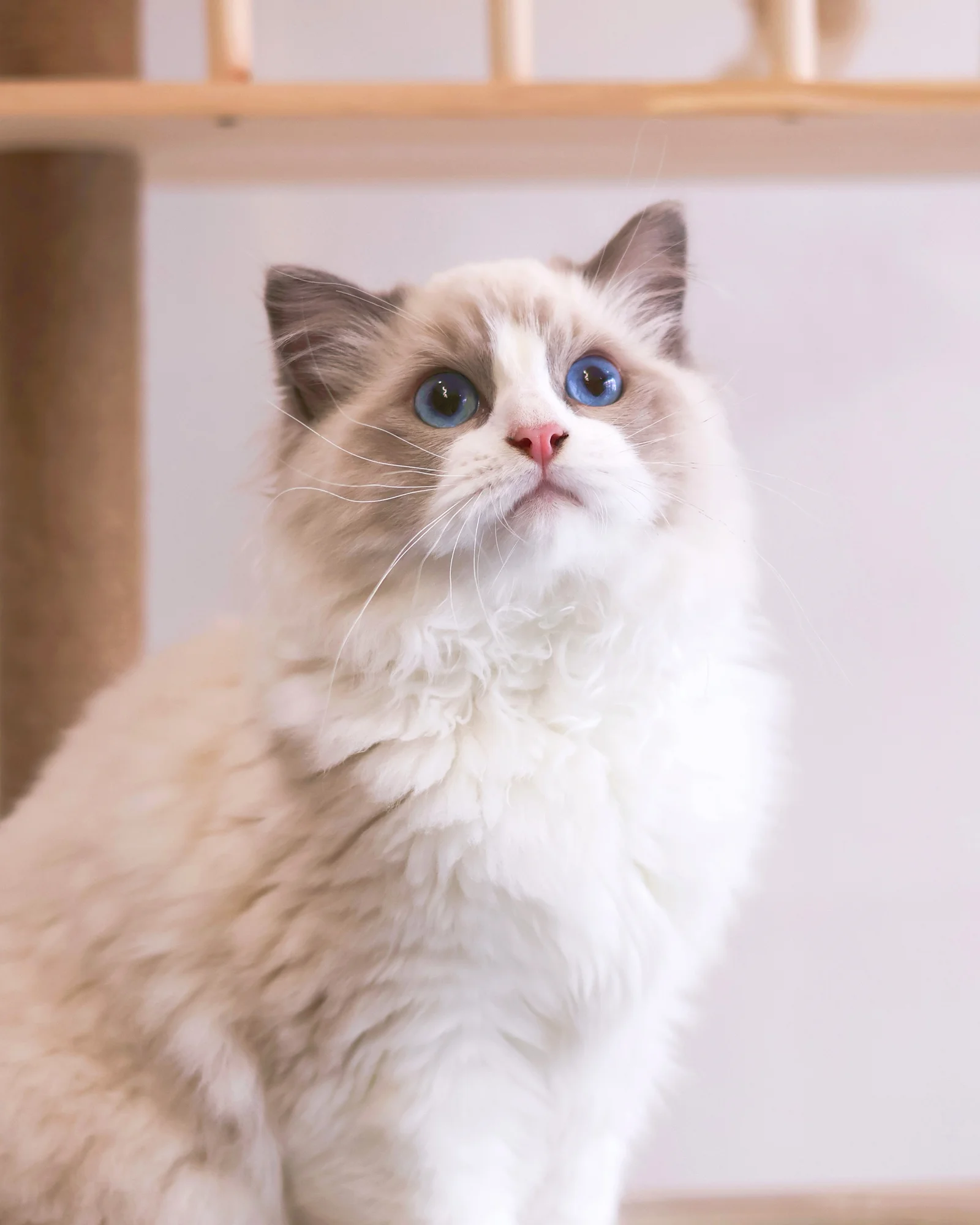
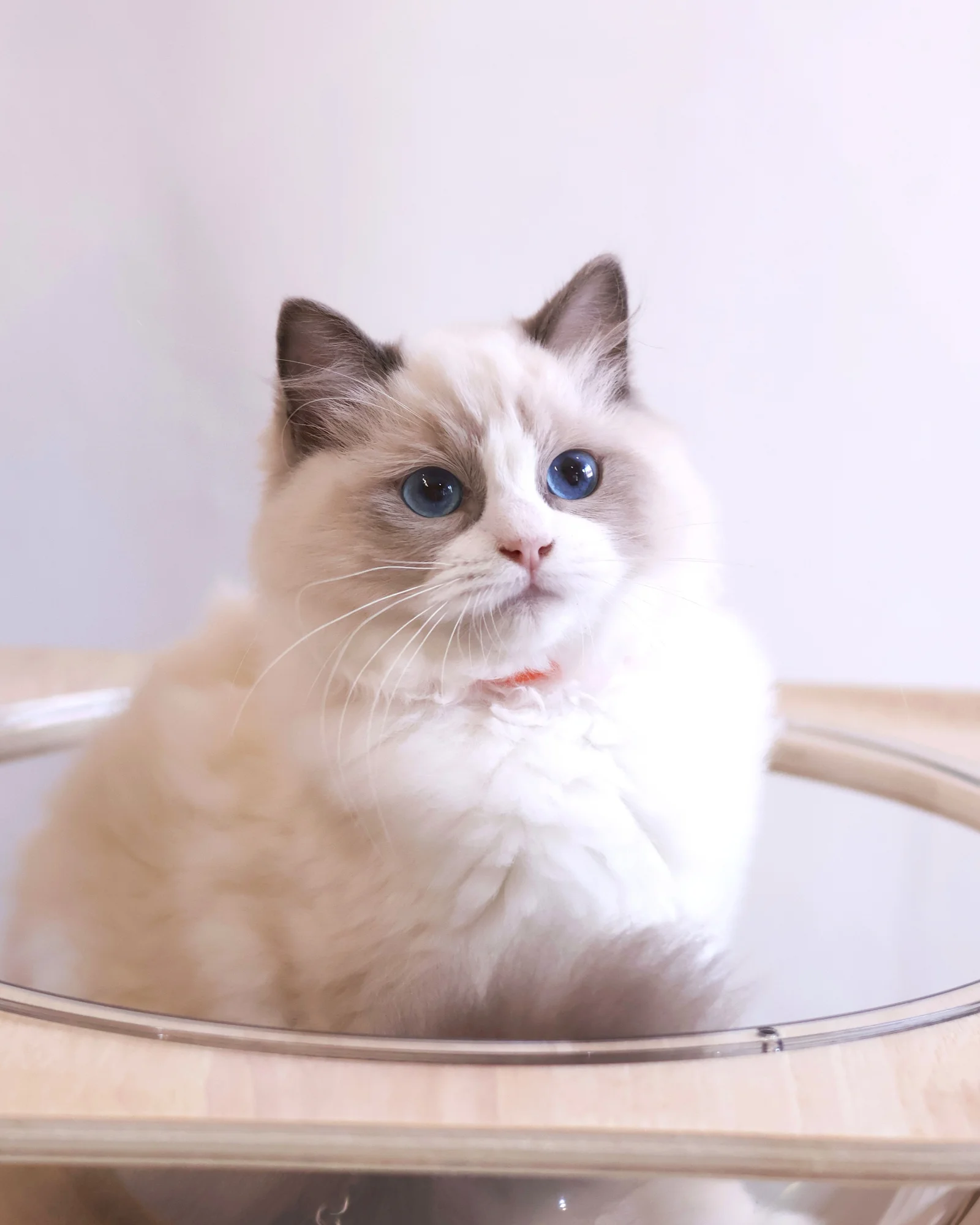
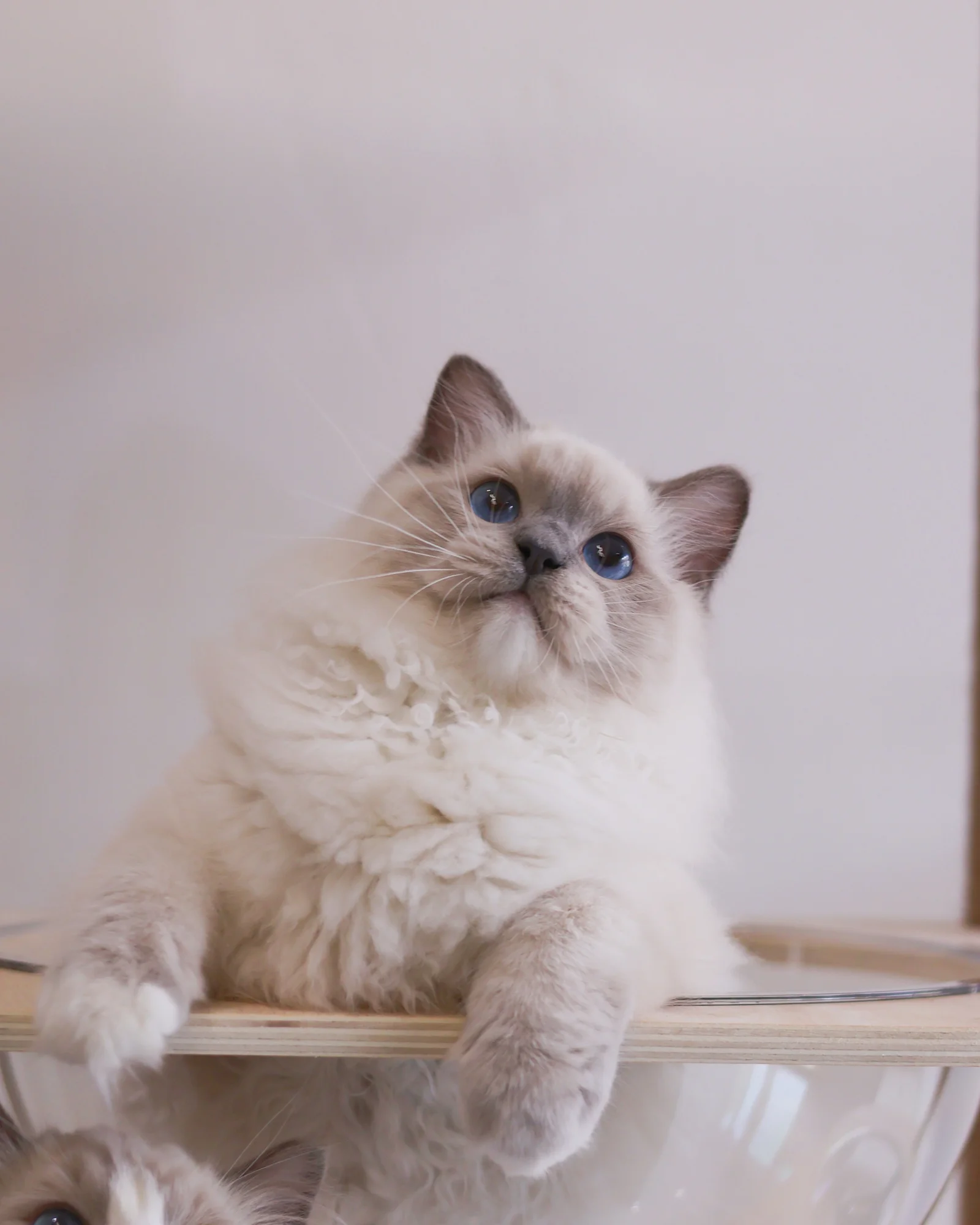
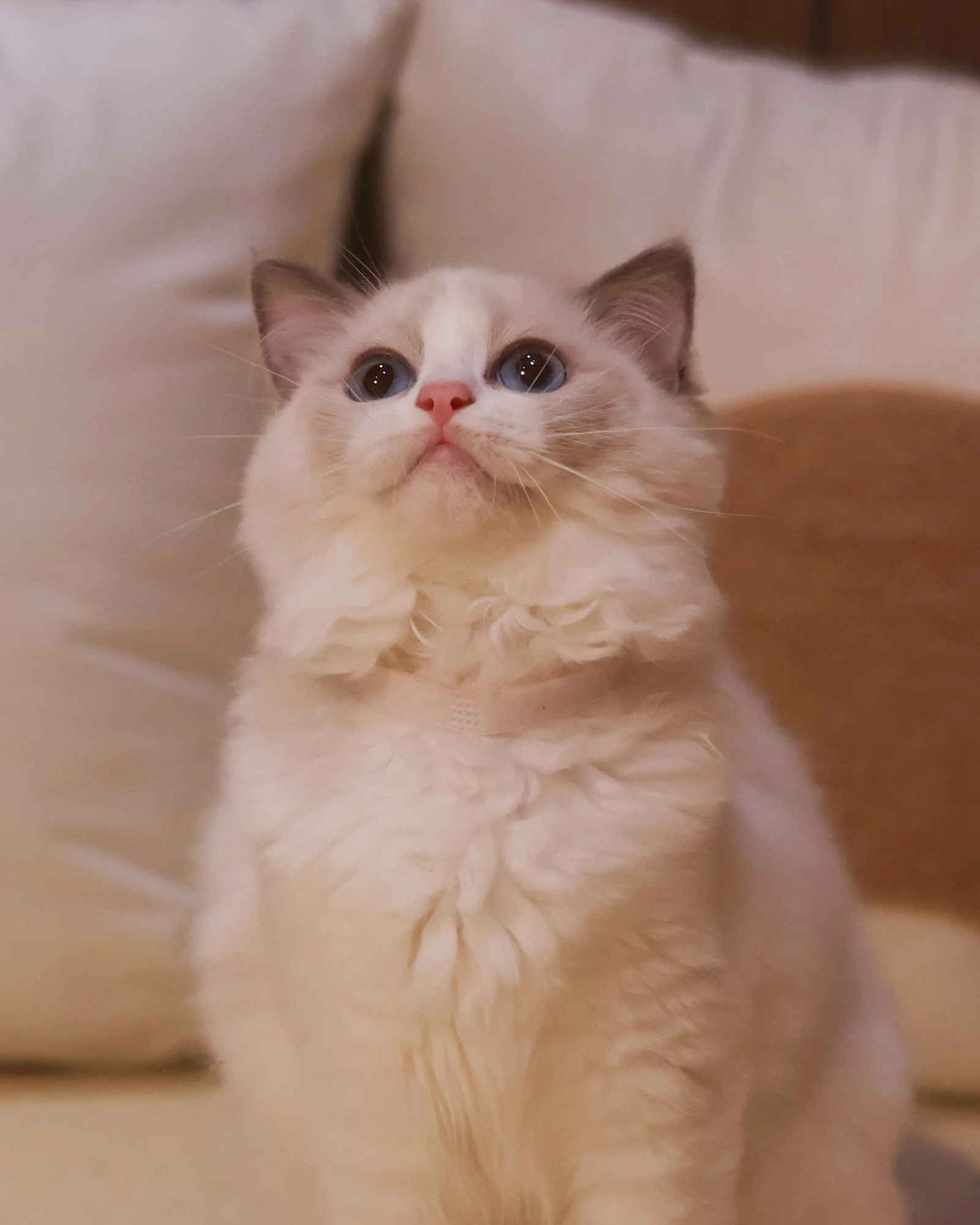
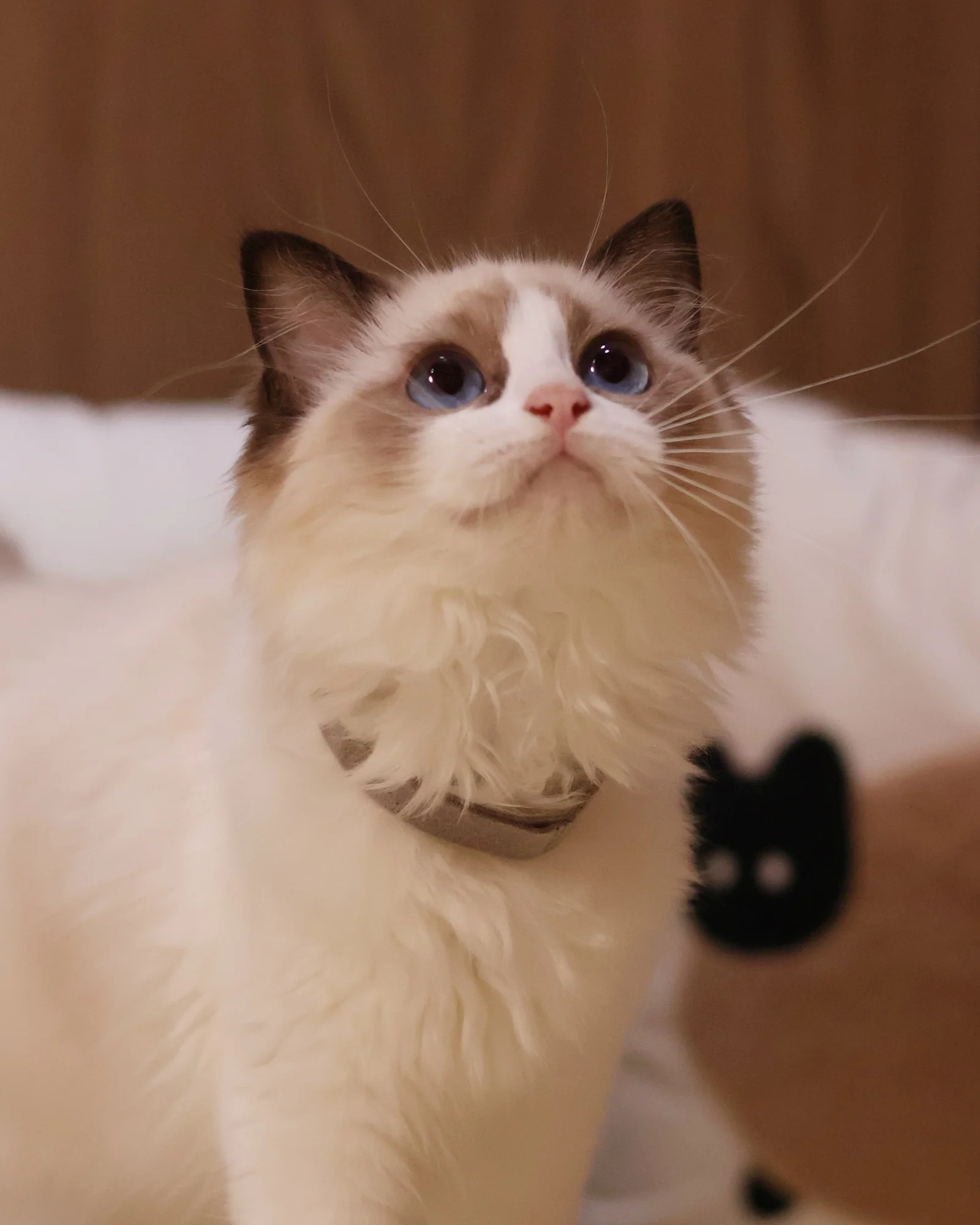
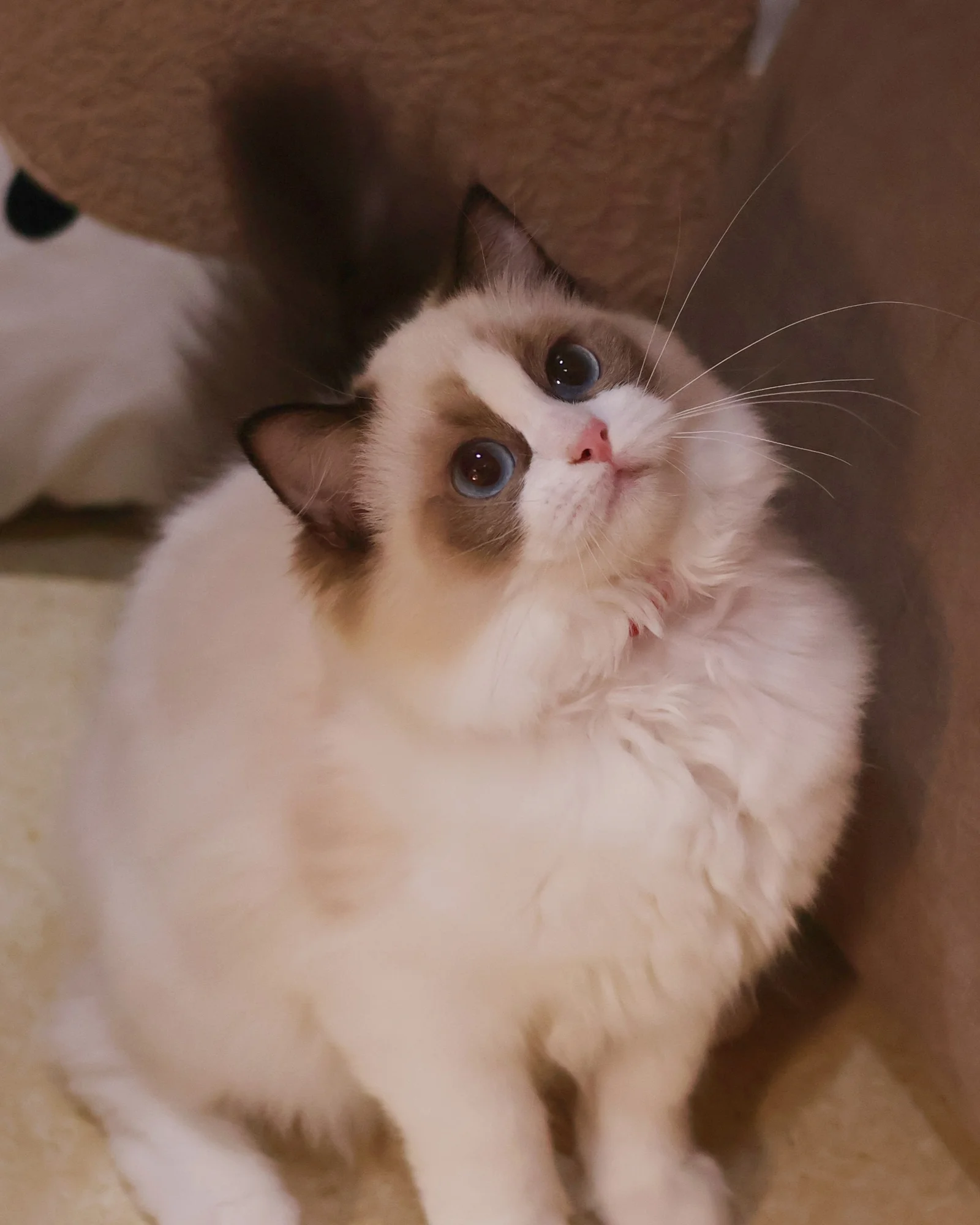
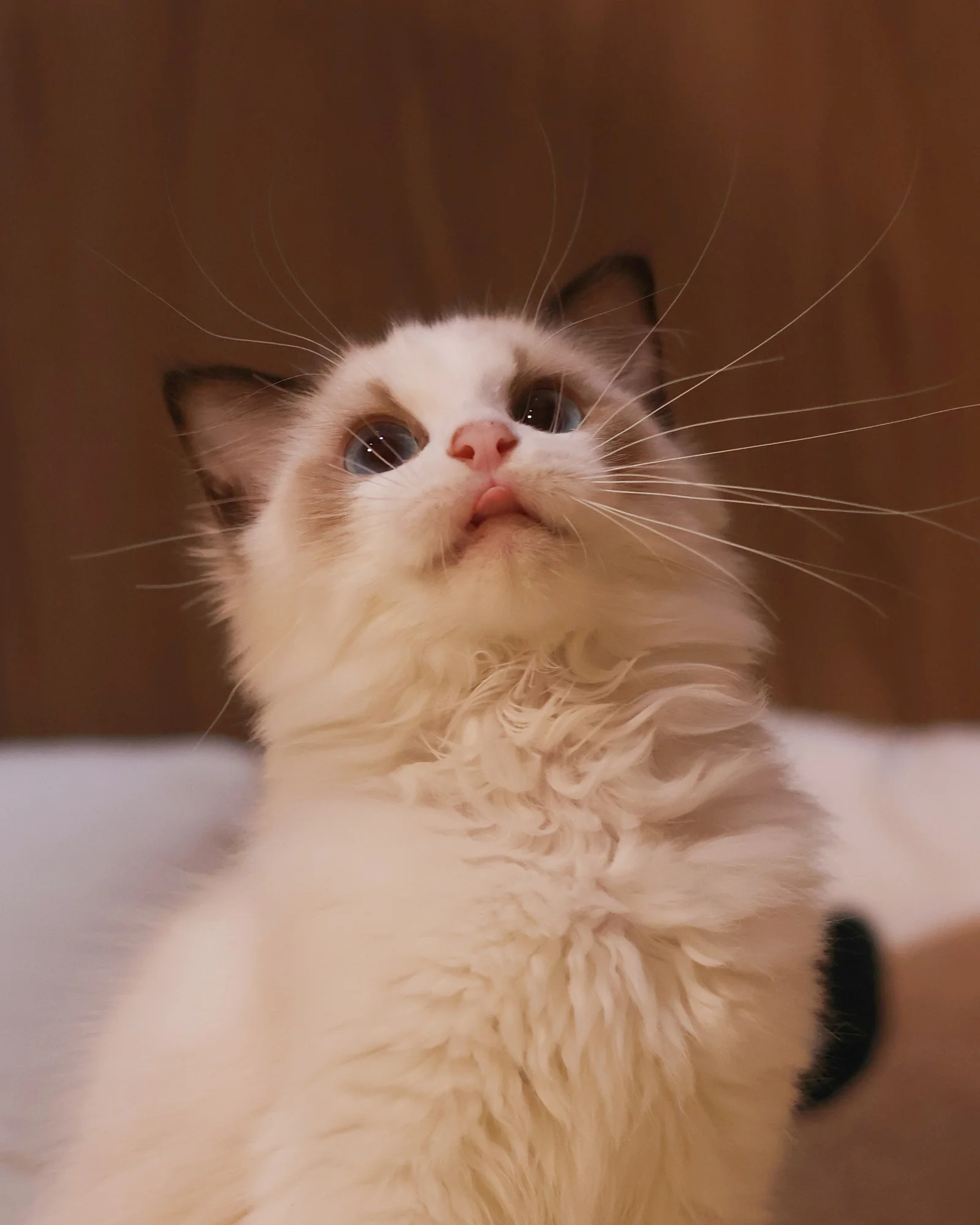
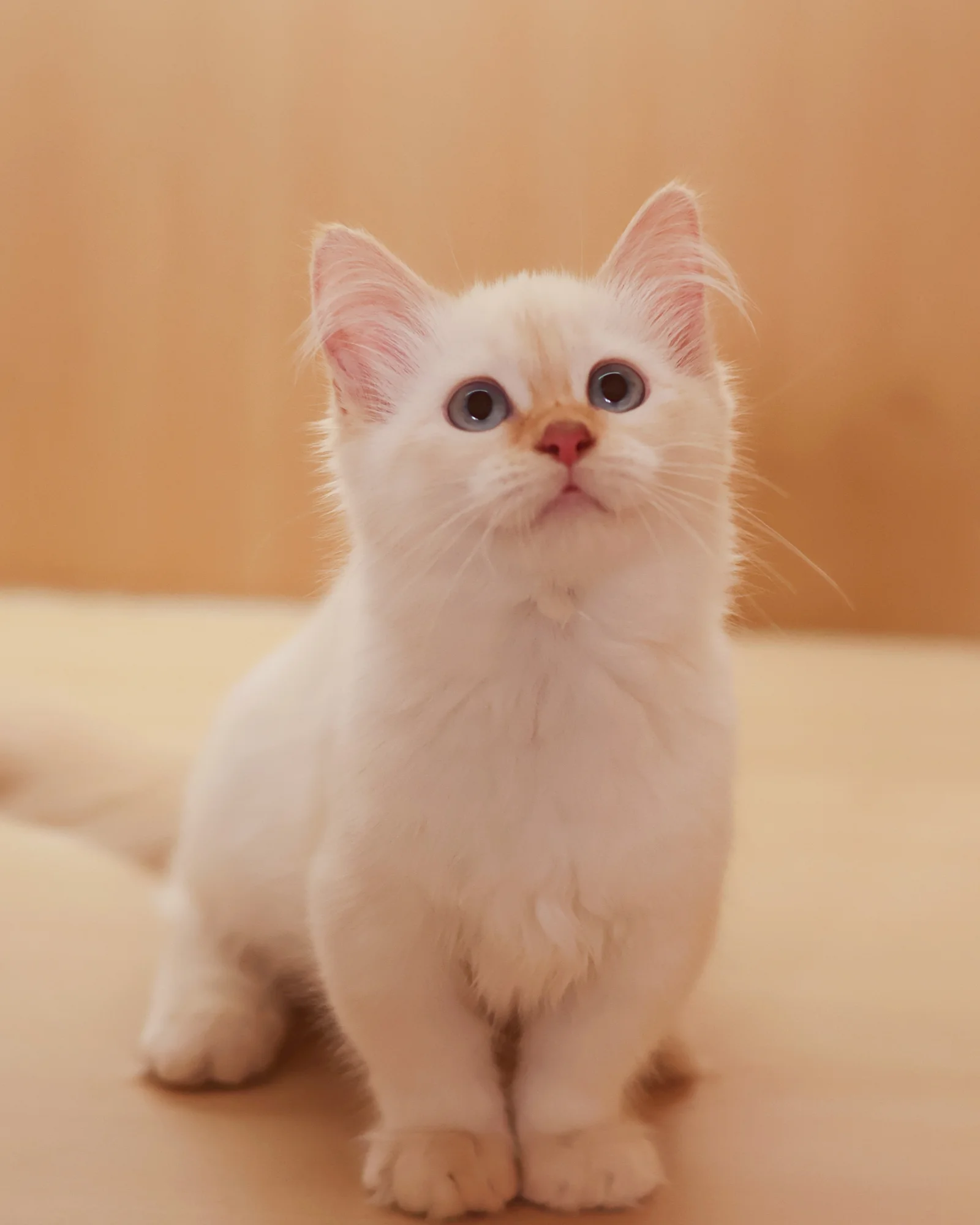
Blue eyes bring a cool point of light to a kitten's face. Against a pale mask they can look soft and airy; surrounded by darker seal or blue-grey markings, they become the first feature you notice. The effect is especially expressive on a Ragdoll because the eyes are large and oval, with plenty of space between them.
The colour can move from clear sky blue to a deeper sapphire depending on the kitten, the light and the size of the pupil. It creates a calm visual impression, but eye colour does not decide personality. The kitten's profile and a viewing tell you whether the individual is quiet, playful, confident or happiest staying close to people.
How Do a Kitten's Eyes Become Blue?
The blue appearance comes from having very little pigment in the front layers of the iris. Light enters the eye and shorter blue wavelengths are scattered back towards us, so the iris looks blue even though it contains no blue dye. More iris pigment produces colours such as green, gold or copper.
This is also why the same pair of eyes can look pale beside a bright window and much deeper indoors. A phone camera may intensify the blue, cool it towards grey or reflect the room in the pupil. Recent photographs taken in ordinary daylight give the most realistic comparison.
Why Blue Eyes and Pointed Coats Often Appear Together
Many blue-eyed cats have a pointed coat: a lighter body with darker colour on the face, ears, legs and tail. A temperature-sensitive form of the TYR gene reduces pigment production in warmer parts of the body, while the cooler extremities develop stronger colour. The same Siamese-type colour restriction is associated with blue eyes.
On a young Ragdoll, the body may still look very pale while the mask and tail are beginning to deepen. TICA notes that Ragdoll colour develops slowly and may not reach its full depth until around three years of age. The blue eyes remain the cool centre of the face while the surrounding points become more defined.
Which Blue-Eyed Breeds Have We Welcomed at NekoTown?
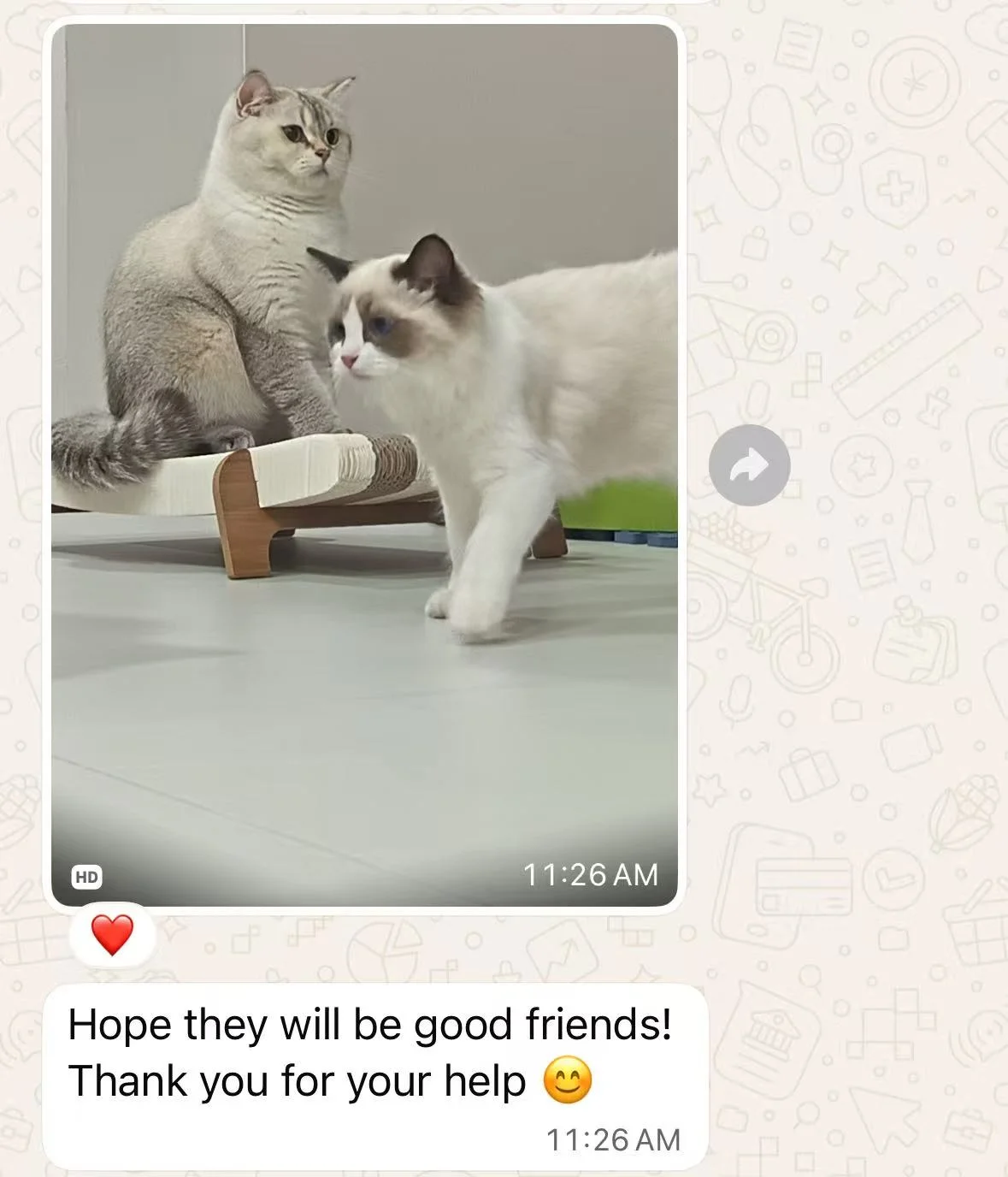
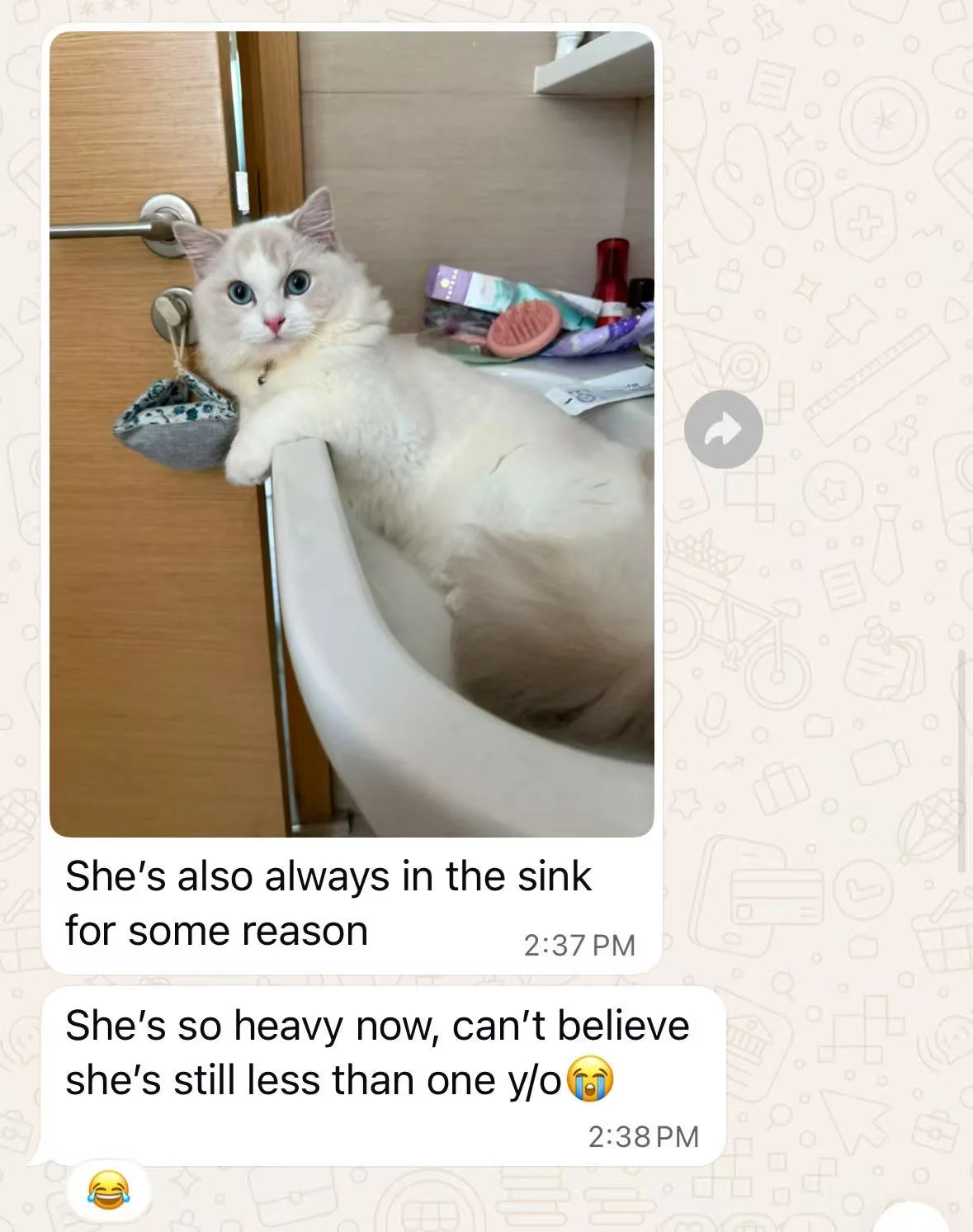
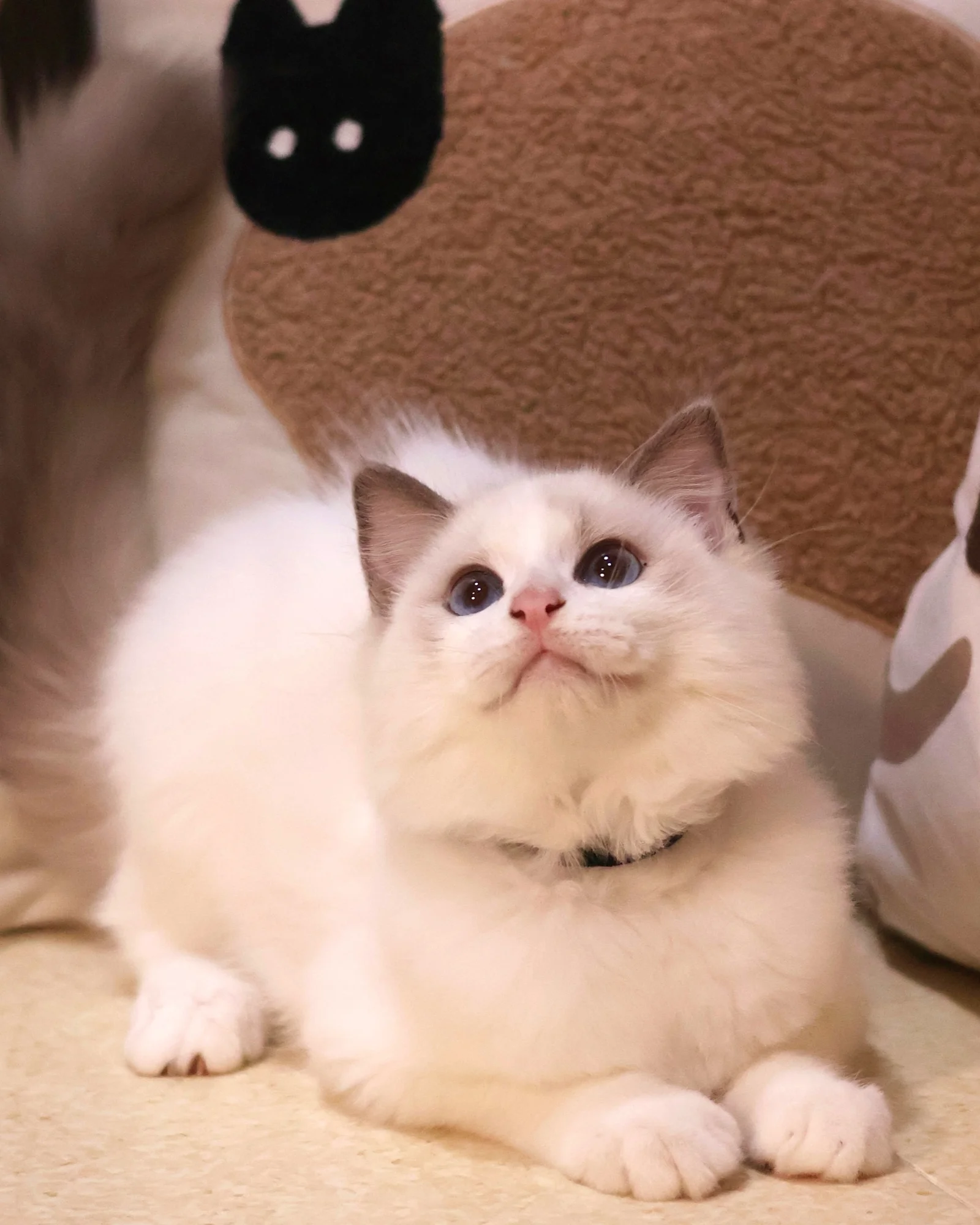
Ragdoll is the breed most people picture first, and it is also the breed represented by our current blue-eyed kittens. Blue eyes are part of the traditional pointed Ragdoll look, whether the coat is seal or blue and whether the pattern is bicolour, mitted or lynx.
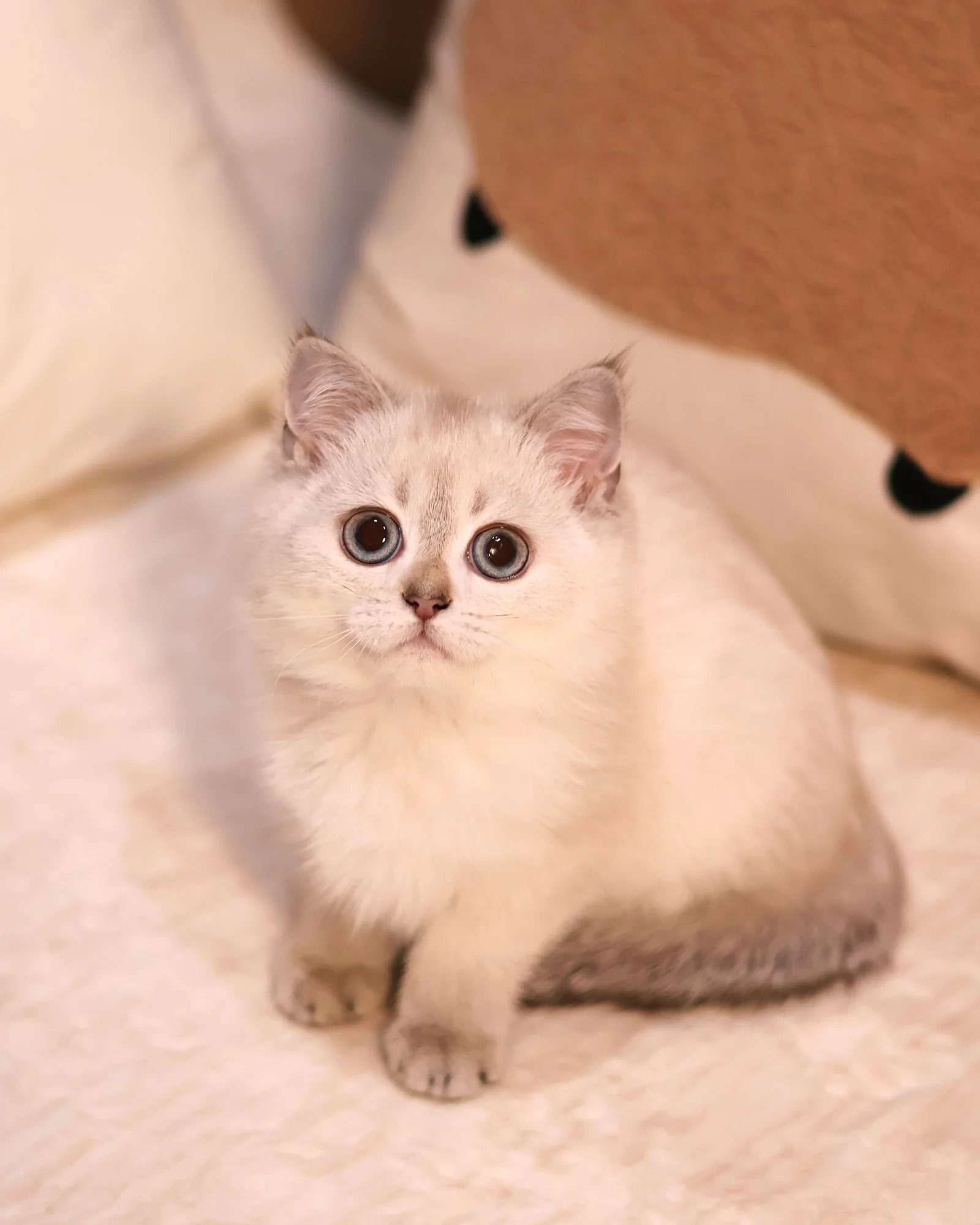
We have also welcomed blue-eyed British Shorthairs and British Longhairs with golden-pointed coats, as well as blue-eyed Munchkins in pointed and tabby-and-white colours. These earlier kittens show that blue eyes are not tied to one body shape or coat length: they can sit in a round British face, beneath a long plush coat or above the compact proportions of a Munchkin. Current availability is shown in the cards above.
Blue Eyes Are Different from a Blue Coat
In cat colour names, blue usually means a soft grey coat created by diluted black pigment. It does not describe the eyes. A blue British Shorthair commonly pairs that grey coat with gold or copper eyes, while a seal bicolour Ragdoll can have dark brown markings and bright blue eyes.
A blue bicolour Ragdoll happens to use the word blue for both parts of the description, but for different reasons: blue names the cool grey points, while blue-eyed describes the iris. Separating the two makes it much easier to compare kitten profiles and colour pages.
How Coat Colour Changes the Way Blue Eyes Look
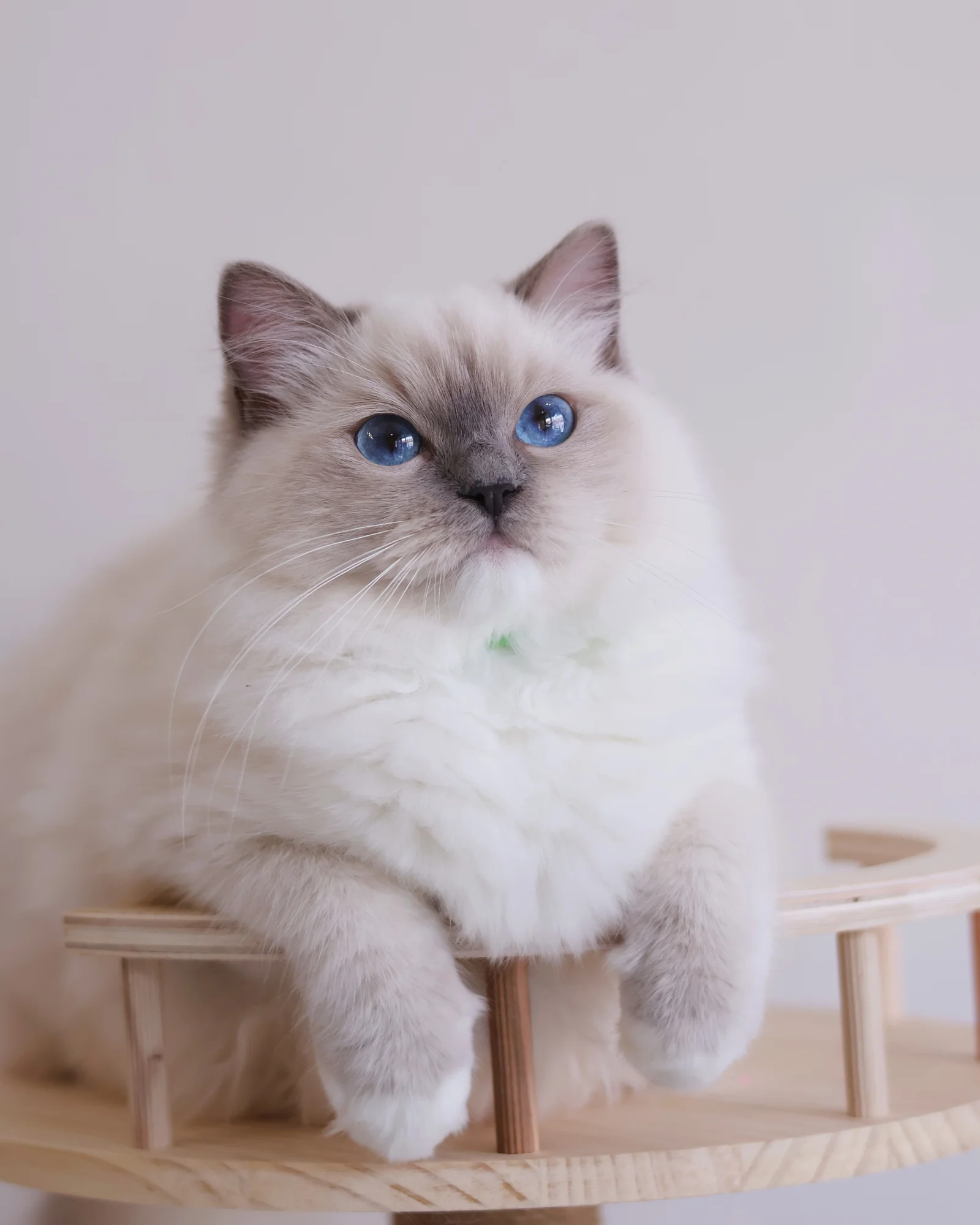
Seal points create the strongest frame. Their dark brown mask makes the blue appear brighter and more concentrated. Blue points use a softer grey frame, so the whole face feels cooler and more delicate. Bicolour white opens the centre of the face, often making the eyes look wider apart, while a lynx pattern adds fine stripes around them.
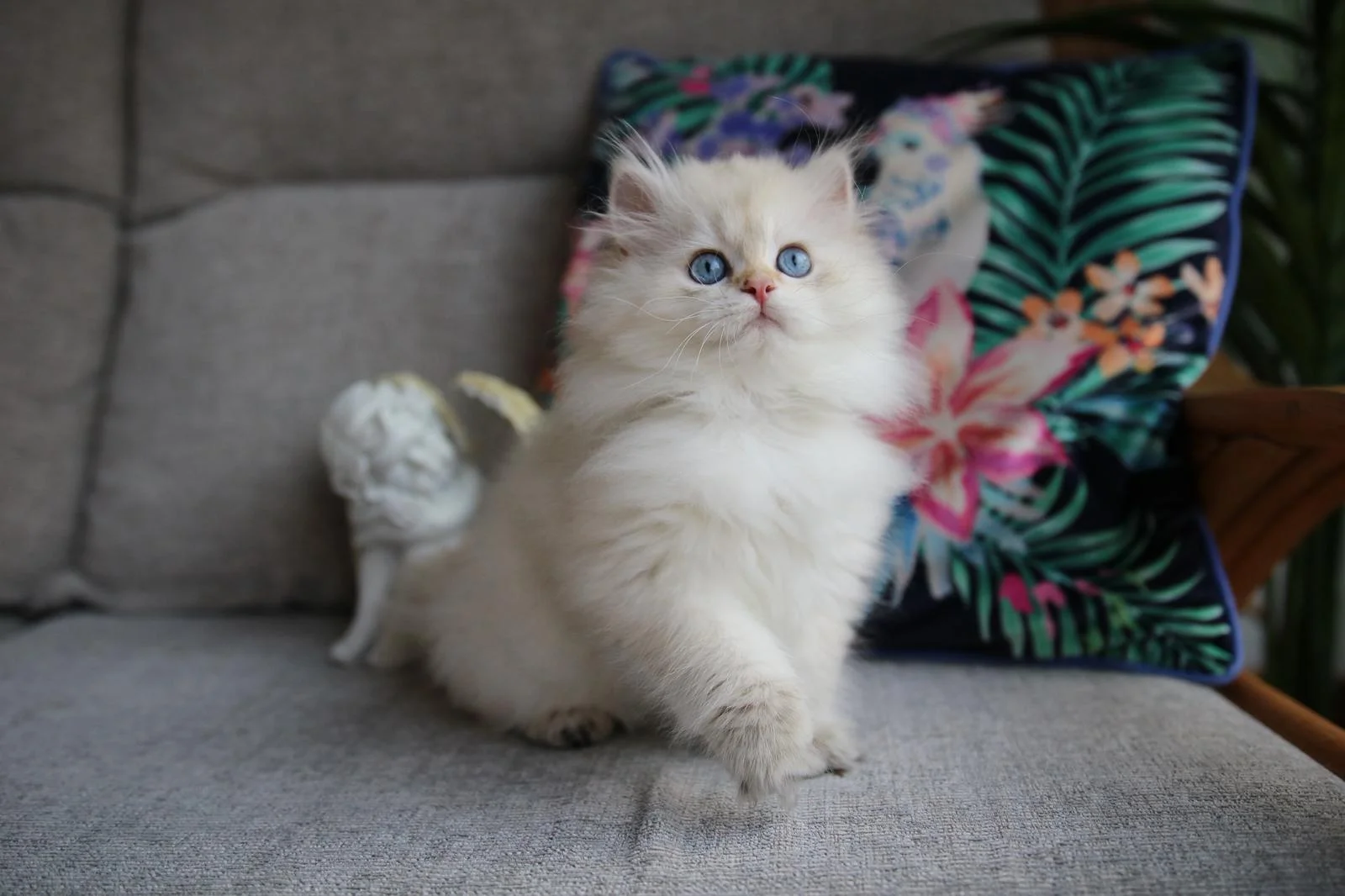
Coat length changes the edges of that frame. A Ragdoll's semi-long fur softens the mask into the cheeks and ruff. A pointed British Shorthair keeps the colour closer to its round face, while a British Longhair surrounds the same eye colour with a fuller, more cloud-like outline.
What to Notice in Blue-Eyed Kitten Photos
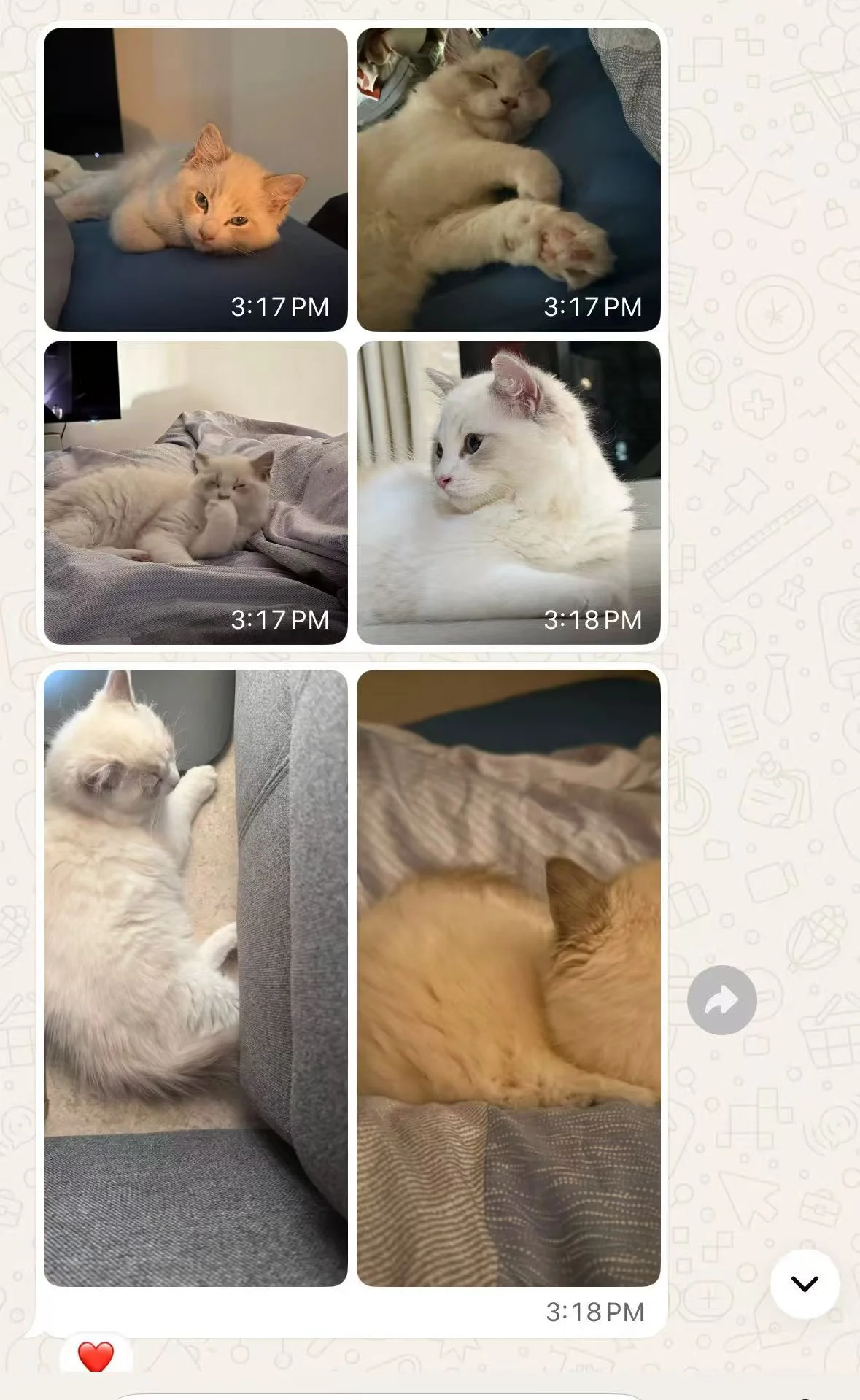
Compare more than one photograph of the same kitten. A front-facing portrait shows whether the eyes appear pale, medium or deep blue, while a side view shows how the eye colour sits beside the mask and ears. Soft daylight preserves both iris detail and coat colour better than direct sun or a bright flash.
Pupil size also changes the impression. In bright light the pupil narrows and more of the blue iris is visible; in dim light the pupil opens and the remaining blue forms a slimmer ring. These normal lighting differences explain why one kitten can seem to have several shades of blue across its gallery.
Caring for Blue Eyes in a Singapore Home
Daily care is the same as for other eye colours. Keep the face clean with gentle wiping when needed and notice the eyes as part of everyday care. Healthy eyes should look bright and clear, with pupils that match in size and no persistent squinting.
Redness, cloudiness, repeated discharge, obvious discomfort or a new difference between the pupils deserves prompt veterinary attention, whatever the eye colour. Singapore's bright daylight can also create strong reflections in photographs, so assess appearance in comfortable indoor light rather than shining a phone flash directly at the kitten.
Current Blue-Eyed Kitten Availability
The cards above show blue-eyed kittens that are available now or arriving soon. Open a kitten's profile for recent photos and the latest availability. If none are shown, tell us which combination you prefer—seal or blue points, bicolour or mitted, and a shorter or longer coat—and we can let you know whether a similar kitten is expected.
Meet a Blue-Eyed Kitten in Person
A viewing is the easiest way to see the true eye shade without filters, flash or screen differences. At 599 Geylang Road, you can look at the kitten in ordinary indoor light, compare the face from more than one angle and spend time discovering the individual personality behind the colour.
Book a blue-eyed kitten viewing, explore our Ragdoll kittens in Singapore or browse all available kittens.
More Blue-Eyed Kittens We Have Welcomed
These kittens have already found homes, but their profiles show the range of breeds, coat colours and patterns that can be paired with blue eyes.
Blue-Eyed Kittens FAQ
Clear answers for families looking for a blue-eyed kitten in Singapore.