Ragdoll in Singapore: A Complete Guide to the Breed
Meet the blue-eyed breed behind bicolour, mitted and lynx patterns, then compare adult size, temperament, grooming and life with a Ragdoll in Singapore.

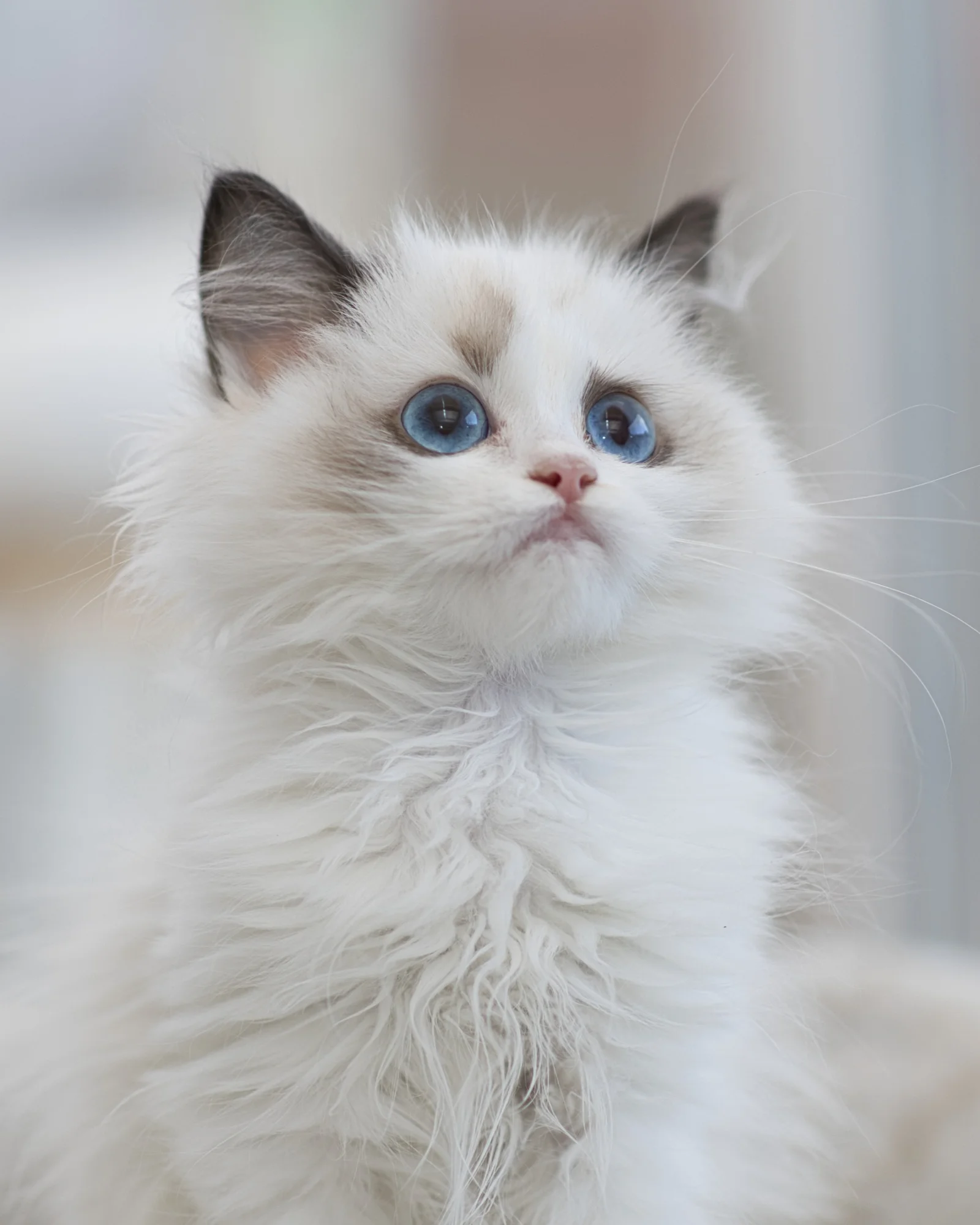
A Ragdoll’s blue eyes are instantly recognisable, but the face around them is where each kitten becomes individual. A bicolour pattern opens the centre of the face with white. A mitted pattern keeps more colour on the mask and adds white paws. Lynx lines bring fine detail through the points. Seal grows warmer and deeper; blue stays cooler and softer.
This guide covers the Ragdoll breed itself—body, developing colour, temperament, grooming, HCM records and life in a Singapore home. Our Ragdoll kittens in Singapore page carries current kittens and viewing information, while our Ragdoll colour and pattern guide explains the visual details.
The History of the Ragdoll Cat
The Ragdoll traces its roots to a white domestic longhaired cat named Josephine. In the 1960s, breeder Ann Baker began developing the breed in Riverside, California, using cats descended from Josephine. Daddy Warbucks, Buckwheat and Fugianna helped establish the early lines. In 1965, two kittens from a pairing of Daddy Warbucks and Buckwheat, Raggedy Ann Kyoto and Raggedy Ann Tiki, became the first registered Ragdolls, according to Britain’s Governing Council of the Cat Fancy (GCCF).
The breed’s move into the show world took several steps. In the 1970s, Denny and Laura Dayton helped develop a breed standard that gained wider recognition. The International Cat Association (TICA) accepted Ragdolls for championship competition in 1979. Two years later, Pat Brownsell and Lulu Rowley brought Ragdolls to the United Kingdom, where the GCCF recognised the breed in 1990. The Cat Fanciers’ Association (CFA) began registering Ragdolls in 1993 and granted championship status in 2000.
Ragdoll Cat Price in Singapore
In Singapore, a purebred Ragdoll from an established cattery generally costs S$4,000–S$8,000. Some catteries charge up to S$10,000 for cats with particularly sought-after pedigrees.
Private rehoming and adoption can cost considerably less. Classified advertisements may list cats for a few hundred to two or three thousand Singapore dollars, although their pedigree, health and the seller’s credentials need to be assessed individually before comparing them with a cattery’s offer.
The price of a Ragdoll in Singapore mainly depends on pedigree, conformation, breeding rights, age, colour and pattern, the cattery’s reputation and health provisions.
What affects the price of a Ragdoll cat in Singapore?
| Factor | Price impact | Example |
|---|---|---|
| Pedigree and registration documents | High | A Ragdoll with verifiable TICA or CFA pedigree records usually costs more than a cat advertised as a Ragdoll whose parentage cannot be documented. |
| Conformation | Very high | Ragdolls whose head proportions, eye shape, ear placement, bone structure and coat more closely match the Ragdoll breed standard often command higher prices. |
| Pet or breeding rights | Very high | For illustration, a pet Ragdoll kitten might cost S$5,000, while a Ragdoll from the same bloodline sold with breeding rights might cost S$9,000 or more. |
| Colour and pattern | Moderate | Some catteries charge more for Ragdolls with sought-after colours and patterns or particularly symmetrical bicolour markings. |
| Age | Moderate to high | Ragdoll kittens aged three to five months usually cost more than retired Ragdoll breeding adults. |
| Health screening | Moderate | Screening Ragdoll parents for inherited conditions, vaccinating the Ragdoll kitten and arranging veterinary checks are often reflected in a higher price. |
| Cattery reputation | Moderate to high | Catteries with a long history of working with Ragdolls and dependable support after purchase may charge a brand premium. |
Each cattery sets its own premiums, although the underlying pricing factors are similar.
A cattery’s quote also reflects the services provided and the cost of running the business. Differences in price can reflect differences in the consistency of the breeding programme and the reliability of support after purchase.
An established cattery’s brand premium can come from two main strengths, the predictability of its cats’ quality and the reliability of its support after purchase. A business that has operated for years has had time to develop these capabilities.
Consistency means that, through ongoing breeding, selection and care, a cattery can reduce the risk of a kitten having poor health, an unsettled temperament or an adult appearance that differs substantially from expectations.
How can long-term breeding improve consistency?
| Capability | What an established cattery may offer | Practical value for you |
|---|---|---|
| Bloodline management | Records of several generations of ancestors, relationships and health history. | Helps reduce risks associated with poorly planned close-relative matings. |
| Managing inherited disease | Ongoing screening of breeding cats and breeding plans informed by family health history. | Can reduce the risk of some inherited conditions for which screening is available. |
| Predicting adult appearance | Experience of how kittens from several litters in the same bloodline develop as adults. | Provides a stronger basis for discussing likely coat, frame and facial development. |
| Selecting for temperament | Knowledge of the parents’ temperaments and records of their offspring’s behaviour. | Can support breeding decisions aimed at cats that adapt well to family life. |
| Kitten socialisation | Consistent early care, with exposure to people and household environments. | Can reduce some difficulties with adjustment and behaviour. |
| Breeding quality control | Retiring or neutering cats that are unsuitable for further breeding. | Helps reduce the likelihood of undesirable traits continuing in future generations. |
Consider a hypothetical example of two catteries each offering a blue bicolour Ragdoll for S$5,000.
Cattery A has worked with the same bloodline for years. It has records of the parents and grandparents, can show adult photographs of offspring from earlier litters, and provides verifiable results for the breeding cats’ inherited heart disease screening.
Cattery B recently bought a breeding pair. It can show photographs of the parents and the kitten’s current appearance, but has little long-term information about their offspring.
Cattery A has more evidence to draw on when discussing adult appearance and some health risks. Individual kittens will still vary in appearance.
This is the potential value of an established breeding programme. It helps reduce uncertainty while recognising that every cat is an individual.
Why can years in business matter for support after purchase?
Some health problems become apparent weeks, months or even years after a cat goes home. A cattery committed to a lasting business has an incentive to protect its reputation, resolve disputes and improve its breeding programme.
For example, imagine a Ragdoll bought for S$6,000 is diagnosed with a serious illness two months later.
| Stage | A dependable cattery | An unreliable cattery |
|---|---|---|
| Before purchase | Provides written health terms. | Offers only verbal promises. |
| When illness is diagnosed | Helps review the veterinary records and the responsibilities set out in the contract. | Refuses to communicate. |
| Resolving the claim | Handles a refund, compensation or another remedy according to the contract. | Avoids responsibility. |
| Long-term follow-up | Adds relevant findings to the bloodline’s health history. | Keeps no record of whether related offspring develop similar problems. |
An established cattery’s strongest value lies in the evidence it can provide, helping you form clearer expectations about the cat you are bringing home and understand how any problems after purchase will be handled.
We started NekoTown in 2019 and have helped more than 400 families in Singapore welcome a feline companion.
Ragdolls in Singapore: Cat Shows and the HDB Rule Change
Ragdolls appear in Singapore’s pedigree cat shows. CFA’s entry records for the Feline Fanciers Society of Singapore’s November 2026 show at Singapore Expo list Ragdolls in both kitten and championship classes. In CFA’s separate 2026 breed ranking, based on the previous year’s data, the Ragdoll placed second behind the Maine Coon. A local show can give you a chance to see how an adult Ragdoll’s size and build compare with the kittens you’ve seen in photos.
Singapore began allowing pet cats in HDB flats on 1 September 2024. In 2025, 77.2% of resident households lived in HDB dwellings, so the change affected the housing type most households lived in. Under the standard limits, an HDB flat can keep up to two cats, while a private home can generally keep up to three cats or dogs in total.
The licensing transition ended on 31 August 2026. Pet cats must be microchipped and licensed with the Animal & Veterinary Service (AVS). If you’re applying for a cat or dog licence for the first time, complete the online Pet Ownership Course before applying. If your kitten already has a licence, confirm at handover who will initiate the transfer through the Pet Animal Licensing System (PALS).
A pale kitten is not the finished portrait
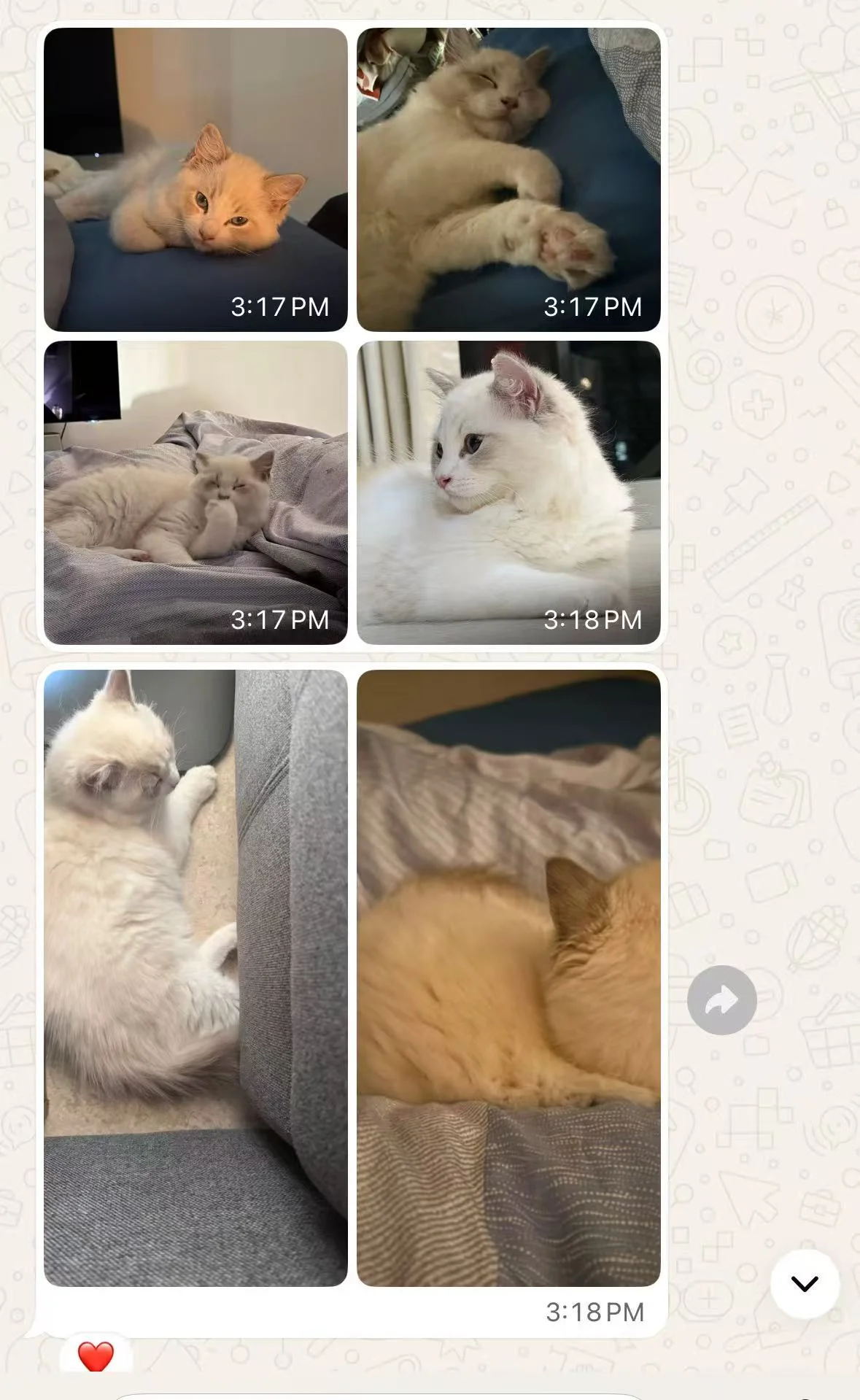
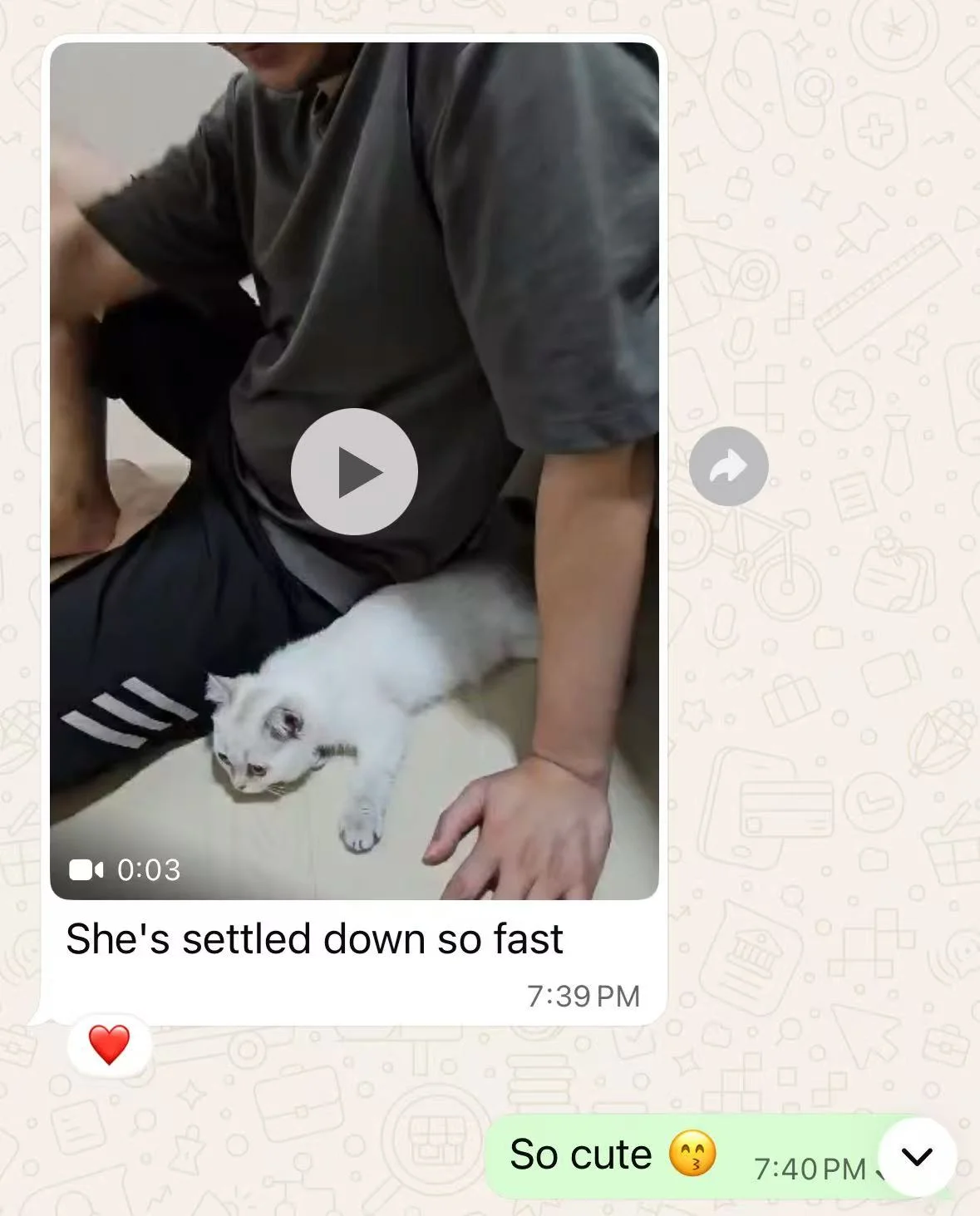
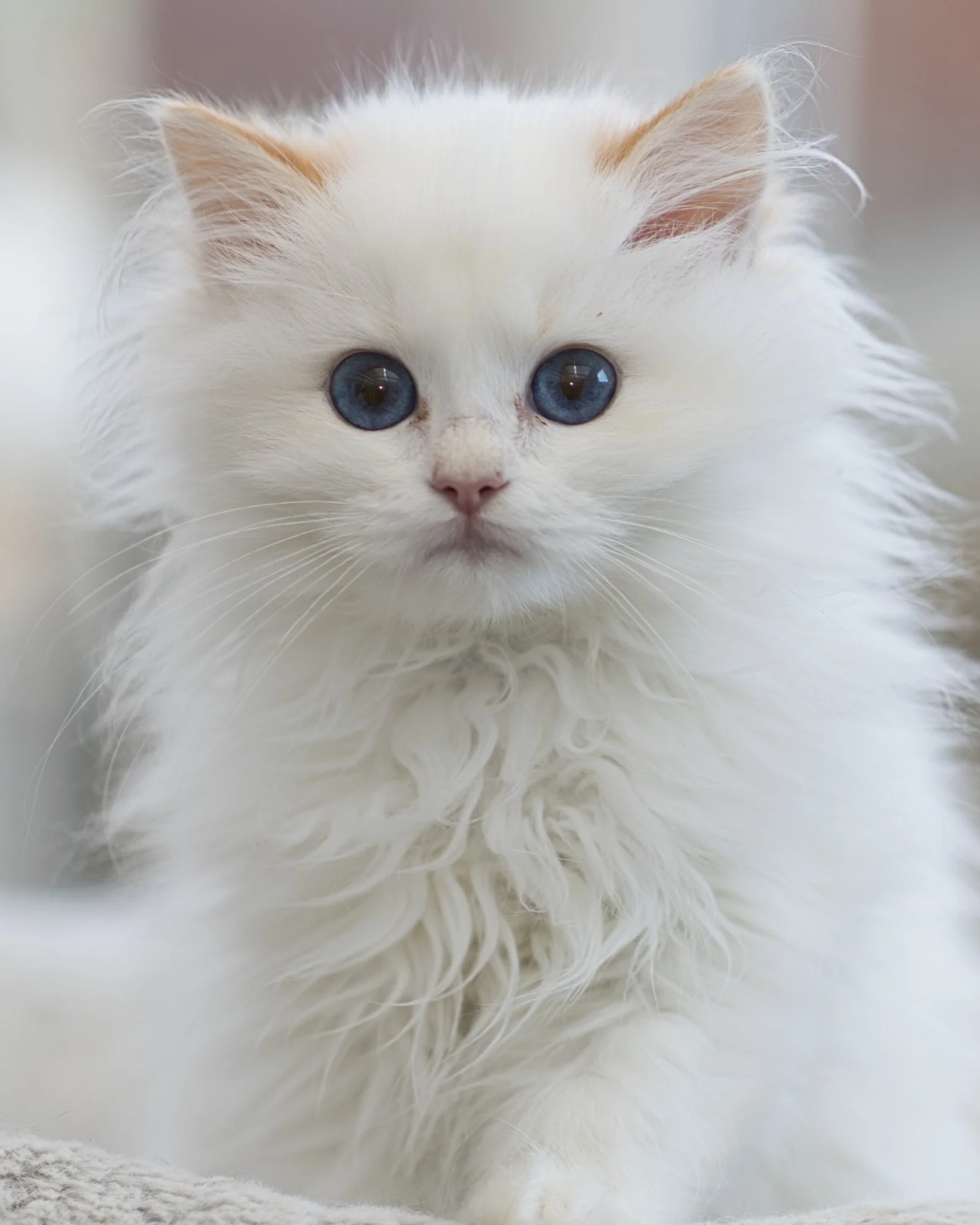
Ragdolls are pointed cats. Kittens begin pale and colour develops gradually on the cooler areas of the body: face, ears, legs and tail. A young kitten’s points may still be faint, and the contrast can continue changing as the cat grows. Parent photographs, pedigree and pattern name provide context, but no kitten becomes an exact copy.
Across Ragdolls NekoTown has cared for, blue bicolour, blue bicolour lynx, seal bicolour and blue mitted have all appeared. They were recorded with blue eyes and medium-length coats, yet the faces looked completely different. Eye colour and coat length stayed familiar; the depth of the points, centre white, mittens and lynx lines created the individual expression.
What does a Ragdoll grow into?
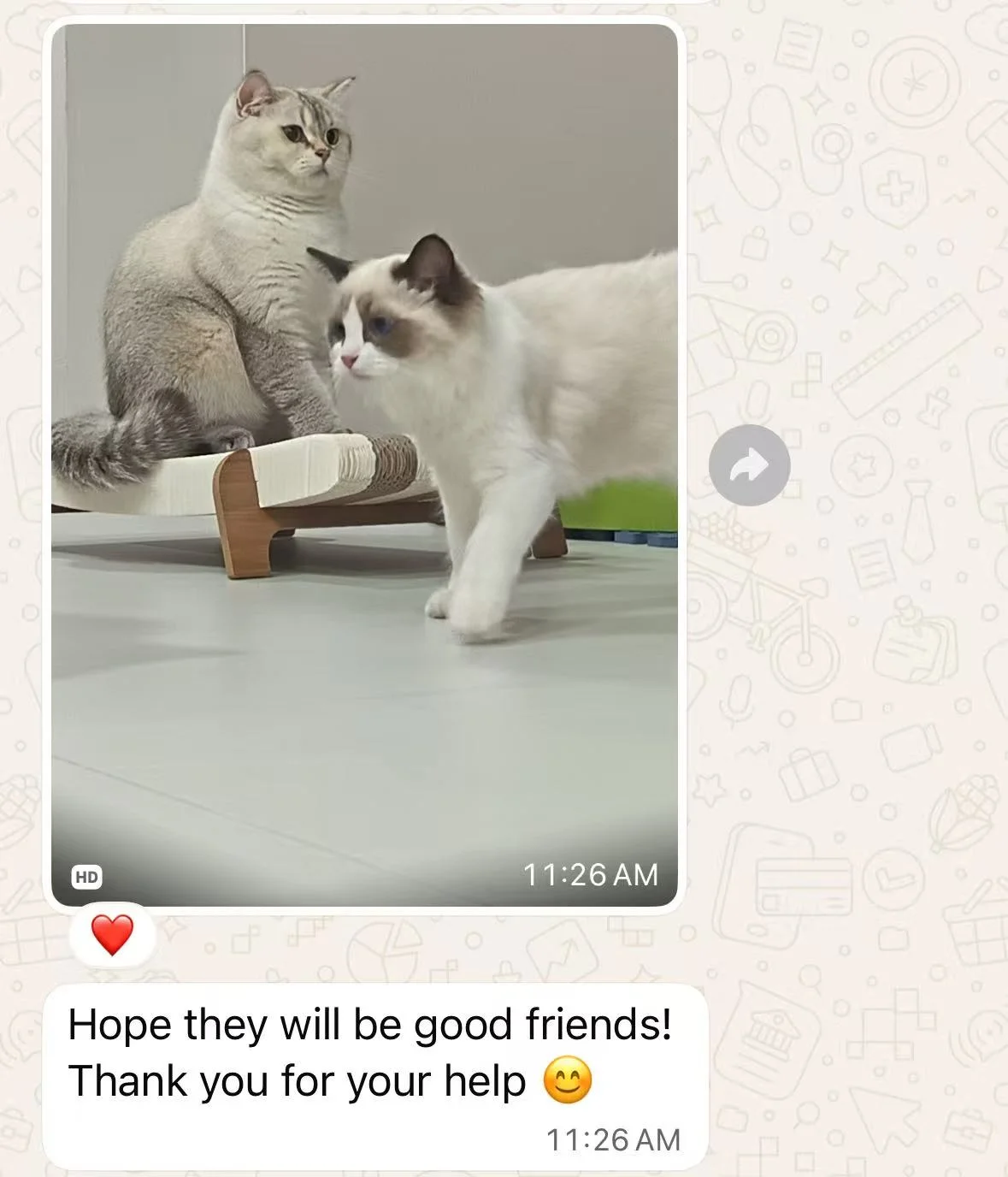
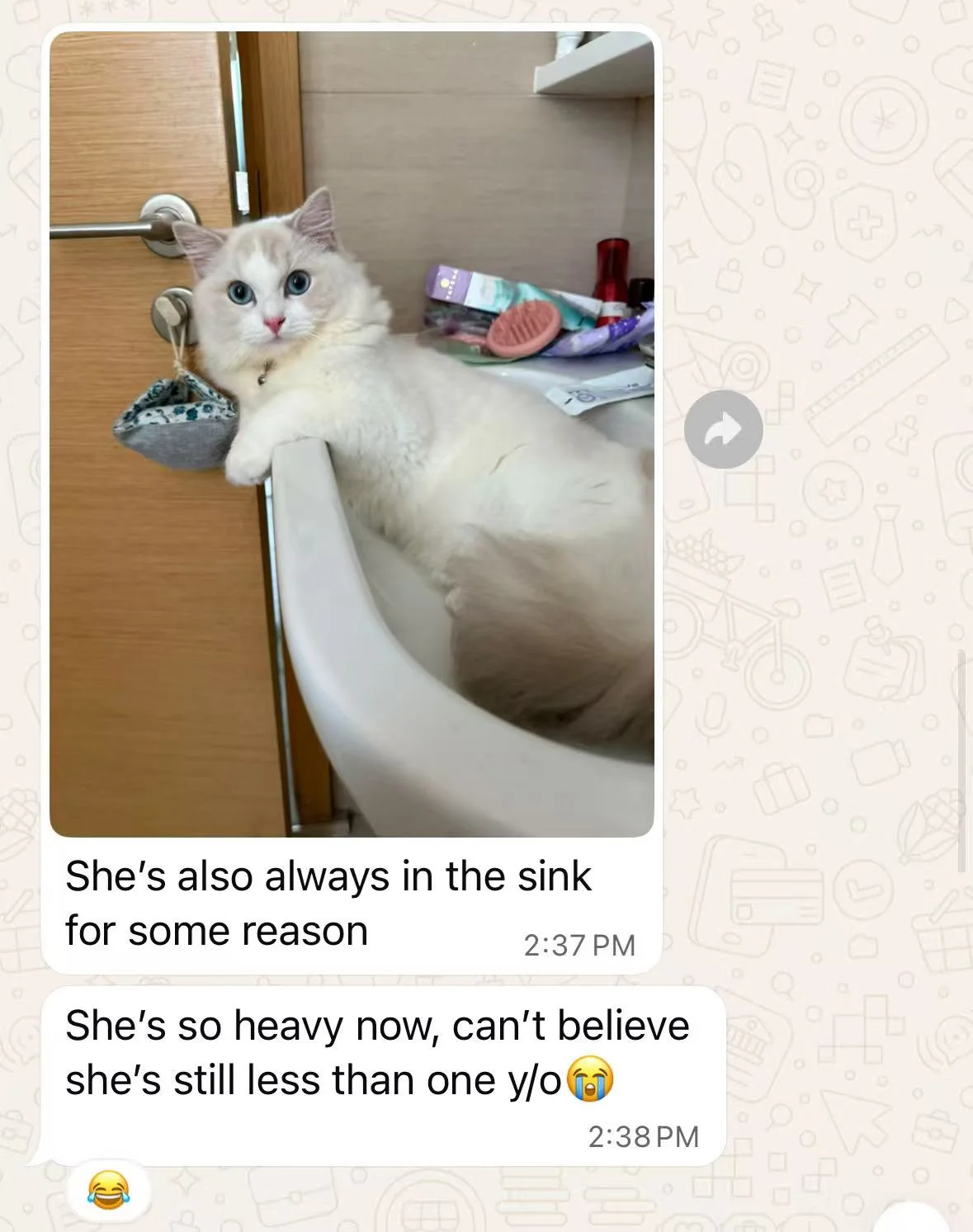
Under the soft coat is a long, substantial body with a broad chest and full tail. A seated photograph can hide that length. When the cat stands and walks, the line from shoulders to tail becomes obvious.
Plan equipment for the adult cat rather than the kitten you first meet. The litter tray needs enough room for a long body to turn. The carrier should allow the cat to stand and lie naturally. Cat trees and shelves need stable bases and platforms that support adult weight.
Does “Ragdoll” mean every cat goes limp when carried?
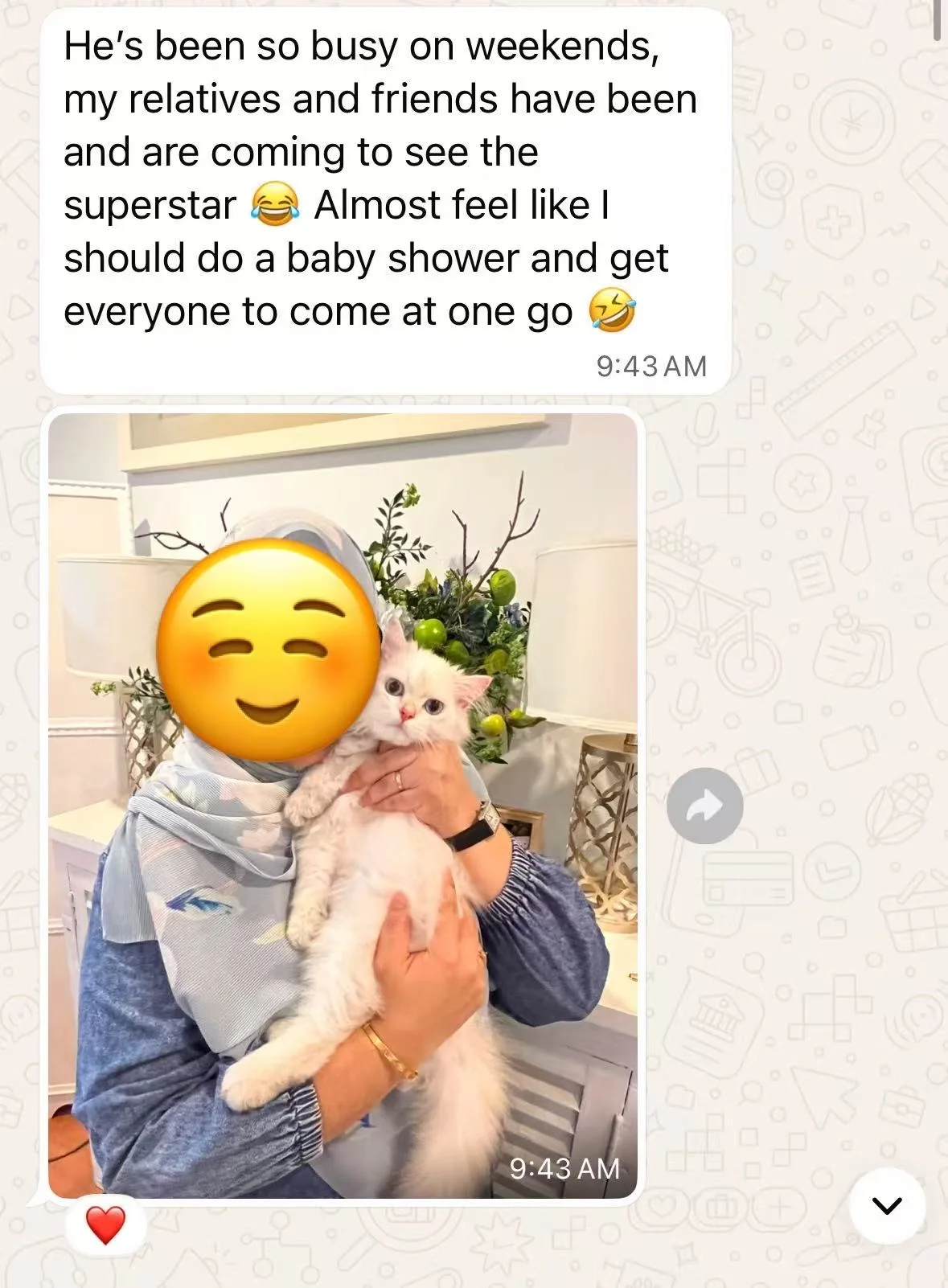
No. The name came from an early impression of cats relaxing when handled; it is not a promise that every individual wants prolonged cuddles. One Ragdoll may enjoy being supported in your arms. Another may follow you from room to room. A third may settle beside you with all four paws on the floor.
During a viewing, let the kitten approach, play and move away naturally. Notice whether it returns, how it responds to touch and what helps it settle. That reveals more than testing how long it tolerates being held.
Is a Ragdoll a Good Fit for a Family with Children?
TICA describes Ragdolls as affectionate cats that generally get along well with children. Young Ragdolls can still be lively, so think about the kind of time your child and the cat can share. A child can sit on the floor and move a wand toy for the kitten to chase, or help an adult put down the food bowl at mealtimes. These are ways to spend time together that give the cat room to choose how close it wants to be.
A 2020 Australian study analysed data collected when children were aged five and seven. Children in cat-only households had fewer reported emotional symptoms and peer difficulties than children in households without pets. The researchers observed an association across households and did not study Ragdolls specifically.
At a viewing, ask what experience the kitten has had around children and what it usually does when the room gets busy. Let your child sit quietly while the kitten chooses whether to approach. If the kitten turns away, tenses up or flattens its ears, show your child how to pause and give it space. At home, give the kitten a quiet retreat the child knows to leave undisturbed. An adult should supervise young children and stay responsible for daily care.
Ragdoll, British Longhair or Birman?
A Ragdoll has a long body, blue eyes and pointed colour. Its semi-long coat generally follows the body more smoothly. A British Longhair is compact and rounder, with a denser coat that stands away from the body and eye colour that changes with coat colour. A Birman is also blue-eyed and pointed, with the breed’s characteristic white gloves.
For an owner, the distinctions affect carrier size, furniture, grooming hand-feel and the visual details you are choosing. They do not create a guaranteed personality.
Grooming a Ragdoll in Singapore
One or two thorough combing sessions each week are a useful starting point, with more attention during heavier shedding or when the individual coat begins to knot. Check behind the ears, under the front legs, along the belly, around the hindquarters and at the base of the tail.
The coat often feels smoother than the denser British Longhair coat, but it still sheds and can tangle where fur rubs. Part the coat and comb towards the skin instead of grooming only the visible surface. Tight mats, redness, odour or repeated licking deserve professional attention.
Singapore humidity also makes drying important. After bathing or cleaning, separate the fur around the chest, belly and underarms and confirm that the coat is dry close to the skin.
Can a Ragdoll live in an HDB flat or condo?
Many Ragdolls can suit a secure indoor apartment when the household plans for adult size, daily play and regular company. They still run, jump, climb and investigate open doors. Windows and balconies need reliable fall protection.
Provide stable furniture, scratching choices, hiding places and a quiet resting area. Keep food, water and litter apart. A predictable routine helps, but “calm breed” does not mean the cat should spend each day without interaction or enrichment.
Check the current cat-keeping limits and licensing steps before bringing your kitten home. Condo by-laws and tenancy terms can add separate conditions.
HCM records: DNA and ultrasound answer different questions
Hypertrophic cardiomyopathy, or HCM, causes abnormal thickening of the heart muscle and can be silent in its early stages. A Ragdoll-associated MYBPC3 variant has been identified and appears on some DNA reports.
A DNA result answers whether the named variant was detected in the submitted sample. It does not rule out every possible cause of HCM. A cardiac ultrasound records the heart’s structure and function at the time of examination. When reviewing either document, check the test name, date, laboratory or examiner and the identity of the cat.
Persistent breathing difficulty, open-mouth breathing, collapse, or sudden pain, coldness or weakness in the hind legs requires emergency veterinary assessment.
What to review before choosing a Ragdoll kitten
Observe the kitten walking, playing, approaching people and settling after activity.
Match its microchip or other identity details across veterinary, vaccination and import records.
Read the pedigree or registration record and recorded parentage.
Check the exact HCM-related reports available for the parents and what each one examined.
Ask about current food, litter, grooming experience, carrier use and household socialisation.
Read the sale agreement, health terms, time limits, exclusions and handover process.
Our Pedigree & Health Standards page explains how the documents connect. During a kitten viewing, we can walk through the records available for the individual in front of you.
The first two days at home
Start with a quiet room containing familiar food and litter, water, a large tray, scratcher, hiding places and an open carrier. Let the kitten choose when to explore. Record eating, drinking, urination, bowel movements, breathing and alertness.
Once the kitten is using the tray reliably and exploring with confidence, introduce more rooms, people and resident animals gradually. Begin coat care with one or two calm minutes and finish before the kitten becomes restless.
When a Ragdoll may be the weaker fit
Take more time if the household wants an independent cat with little daily interaction, furniture cannot accommodate a large adult, window safety is unresolved, or “Ragdoll” is being treated as a guarantee that the cat will enjoy being carried. The best match combines the breed’s needs with the observed individual.
Continue on NekoTown
Ragdoll kittens in Singapore: current kittens and viewing information.
Ragdoll colours and patterns: bicolour, mitted, lynx, seal and blue.
Long-haired kittens in Singapore: compare coat types across breeds.
Book a kitten viewing: meet an individual kitten at NekoTown.
Editorial sources
Questions Buyers Ask About Ragdolls
Clear answers about blue eyes, developing colour, handling, jumping and HCM reports.