Ragdoll Colours and Patterns in Singapore: A Visual Guide
Learn how to identify Ragdoll colours and patterns in Singapore, from seal and blue to bicolour, mitted, colourpoint, lynx and kitten colour changes.
Ragdoll names can sound complicated. A kitten may be described as a blue bicolour, seal lynx mitted or blue-cream point, but those words are not simply decorative labels. Each part describes a different feature of the coat.
The easiest way to read a Ragdoll name is:
Ragdoll name = point colour + optional overlay + white pattern.
For example:
- Blue bicolour: blue is the point colour and bicolour is the white pattern.
- Seal lynx mitted: seal is the colour, lynx is the striped overlay and mitted describes the white feet, chin and underbody.
- Blue-cream point: blue and cream form a dilute tortie combination, while point describes the darker extremities.
Once these layers are separated, most Ragdoll colours and patterns become much easier to recognise.
At NekoTown, a colour or pattern name is treated as part of an individual kitten’s identity record. It should connect to the kitten, breeder, registered cattery, parents, litter and available registration documents rather than functioning as a stand-alone quality or price claim.
The Three Layers of a Ragdoll Coat
Begin by separating colour, white pattern and overlay. They answer three different questions.
1. Point colour
The point colour describes the shade on the cooler parts of the cat: primarily the face, ears, legs and tail. The six point colours specifically listed in the CFA Ragdoll standard are:
- seal
- blue
- chocolate
- lilac
- red
- cream
2. White pattern
The white pattern describes where white appears and how much of the cat it covers:
- colourpoint
- mitted
- bicolour
- Van under the CFA standard
3. Optional overlay
An overlay changes the appearance of the coloured points without replacing the underlying colour:
- Lynx: tabby striping across the points
- Tortie: irregular red or cream patches mixed with the base colour
- Tortie-lynx: tortie patches and lynx striping together, sometimes informally called torbie
Lynx therefore does not mean “more white”. A blue lynx bicolour is blue in colour, lynx in overlay and bicolour in white pattern.
This layered approach is also useful when reading a NekoTown kitten profile: identify the base colour first, check for an overlay such as lynx or tortie, and then read the white pattern.
Colourpoint vs Mitted vs Bicolour
These three terms mainly describe white placement.
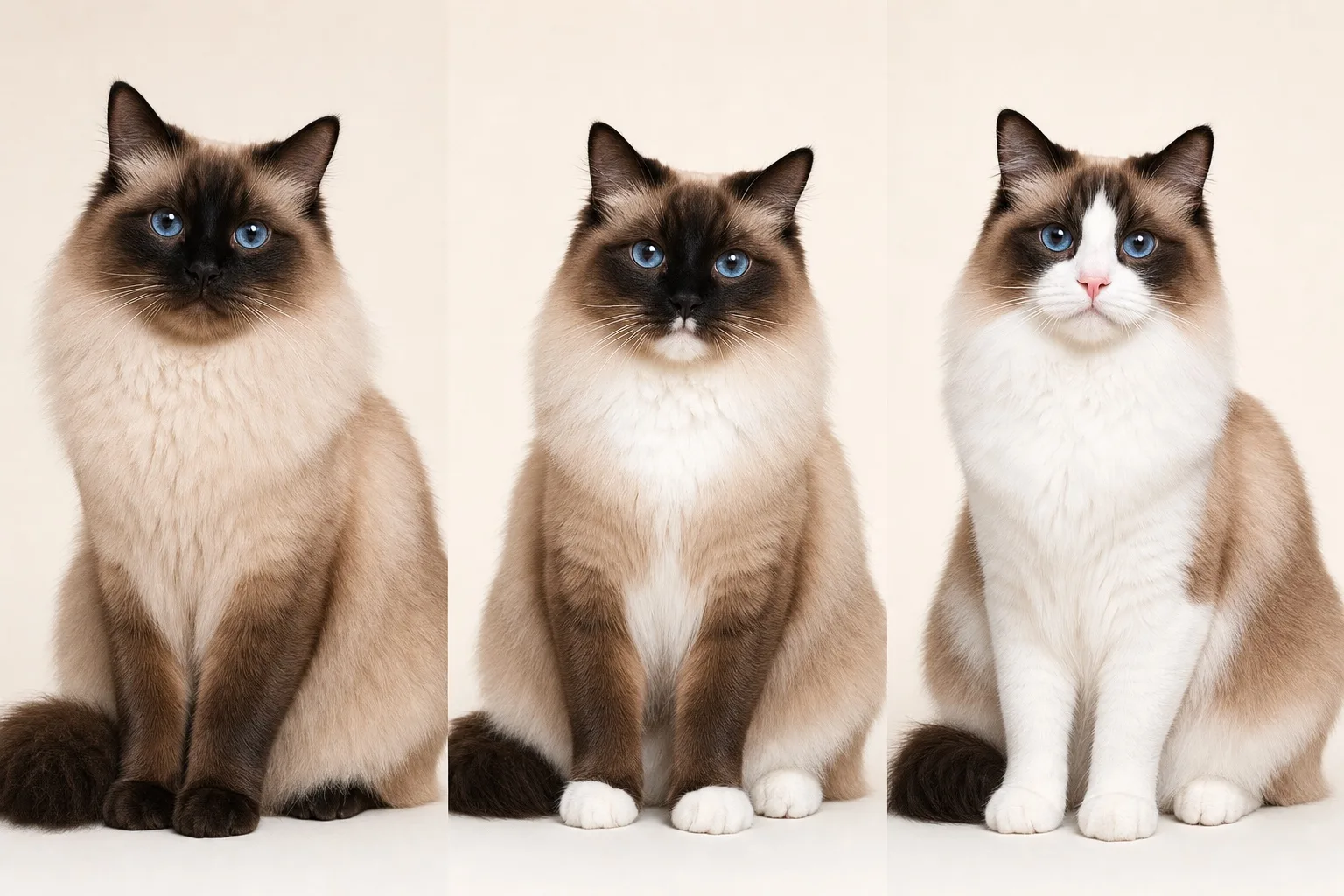
Colourpoint: no additional white spotting
A colourpoint Ragdoll has darker ears, mask, legs, paws and tail over a lighter body. There should be no additional white spotting. The nose leather and paw pads generally follow the point colour.
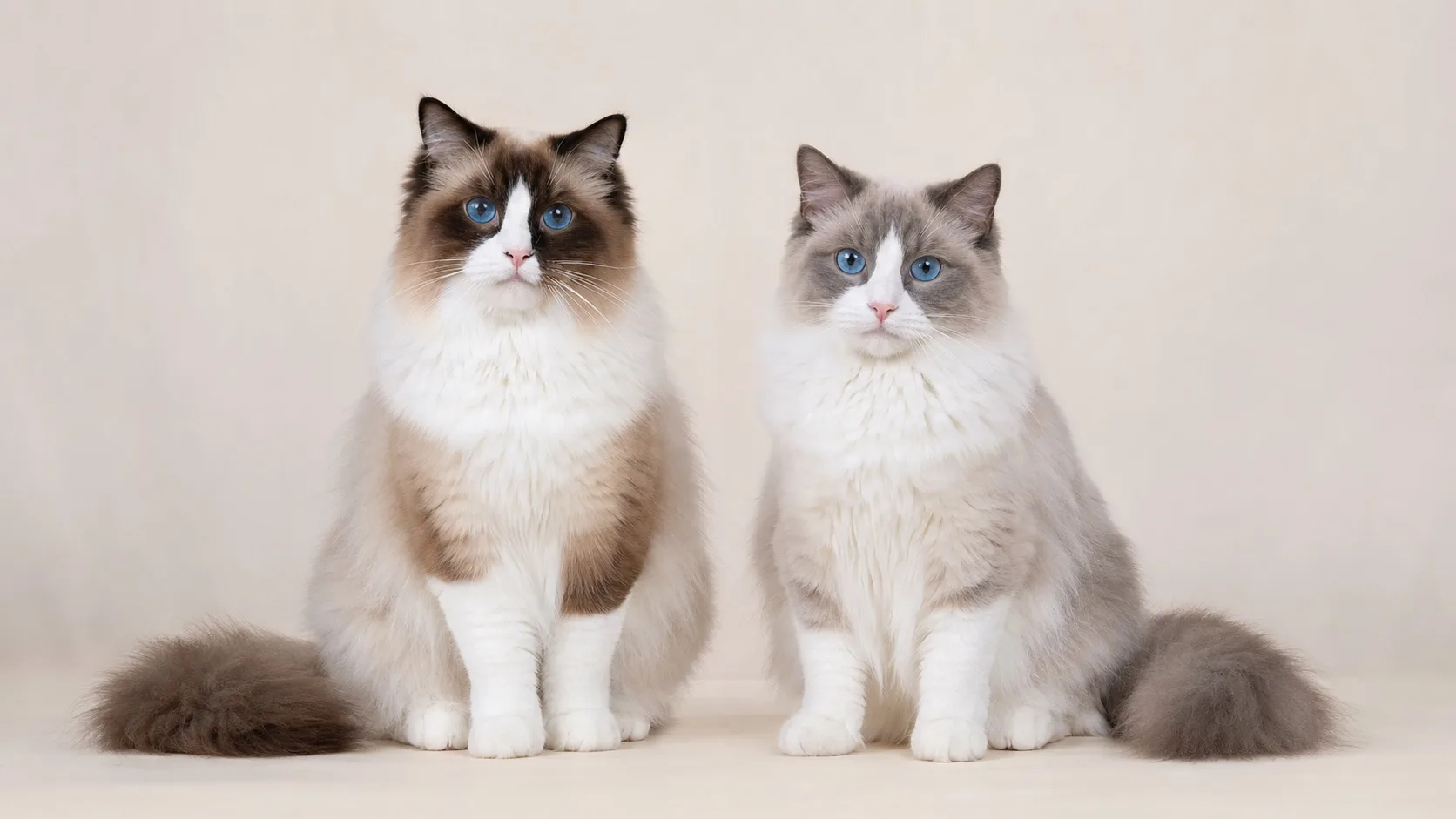
Seal colourpoint produces a strong contrast between the deep warm-brown points and lighter body. Blue colourpoint has a cooler, softer grey appearance.
Mitted: white mittens, chin and belly stripe
A mitted Ragdoll keeps the pointed mask and coloured legs but adds matching white mittens on the front paws. The hind feet are white, the chin is white, and a white stripe runs from the chest along the belly.
Some mitted Ragdolls have a white blaze between the nose and forehead. A blaze does not turn a mitted cat into a bicolour, so it is better to check the chin, belly and all four feet rather than judging only from the face.
Bicolour: an inverted V and more white
A bicolour Ragdoll is usually recognised by the white inverted V around a pink nose. The chin, chest and underbody are white, the legs are preferably white, and colour may remain across the back as a saddle.
The inverted V does not need to look computer-generated or perfectly identical on both sides. Breed standards focus on its placement and extent, while small differences make each cat visually distinct.
Photographs can hide important details through angle, coat volume and lighting. Families visiting NekoTown can compare the kitten’s profile and recorded colour name with the cat in person, checking the chin, belly line, feet and facial V from more than one angle.
Are Van, High-White Bicolour and “Mid-High White” the Same?
Not necessarily.
Under the CFA Ragdoll standard, Van is a defined pattern. Colour is mainly limited to the ears, tail and mask, while the body, legs and feet are predominantly white. A small number of body spots may be allowed.
The TICA 2025 Ragdoll Breed Group standard takes a different approach. Its Ragdoll white divisions list mitted and bicolour, without presenting Van as a separate Ragdoll pattern.
Terms such as high-white bicolour, mid-high white and high mitted are also used by breeders to describe white coverage, genetics or family lines. They can be useful in conversation, but they are not a single set of universal show categories shared by every registry.
When one of these terms appears in a kitten listing, ask:
- Which registry or association is used on the kitten’s documents?
- Is the term a registered colour description, a breeding term or a visual description?
- What is the complete English colour and pattern name on the available record?
NekoTown reviews the registry information shown on the individual kitten’s documents because registration systems vary by country and organisation. Registry affiliation can provide useful identity and pedigree information, but it does not by itself establish every aspect of breeding quality.
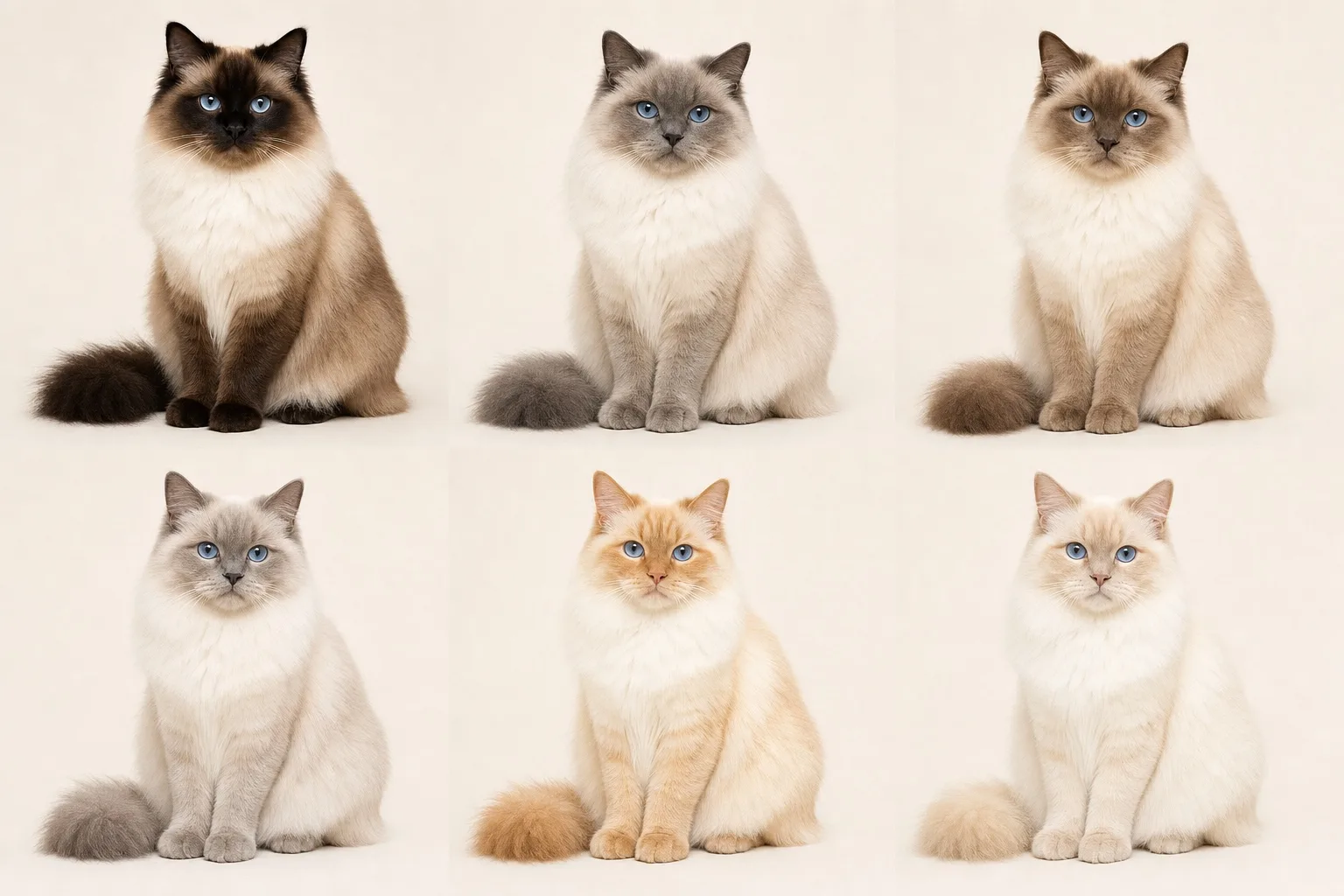
Six Ragdoll Point Colours
Seal
Seal points range from deep warm brown to very dark seal brown, set against a lighter cream or warm fawn body. Seal usually creates the strongest contrast and is the classic Ragdoll appearance many people recognise first.
Blue
Blue does not mean a bright blue coat. It is a cool slate-grey or blue-grey point colour over a cool, pale body. Genetically, blue is the dilute expression of the seal colour family.
Chocolate
Chocolate points are lighter and warmer than seal, resembling milk chocolate rather than dark brown. The body is generally ivory, and the overall contrast is softer.
Lilac
Lilac points are very pale frosty grey with a subtle pink tone. The body is close to white or magnolia. Lilac should not be understood as merely a faded blue photograph; its undertone is also different.
Red
Red point is the term used in breed standards. Pet listings may also call it flame point. The points range from apricot to a stronger red-orange over a pale body.
Cream
Cream is the dilute expression of red. Its points are pale cream or soft buff, producing a gentler contrast than red.
The chart below is an identification guide, not a rarity or price ranking. Actual availability changes, and a current kitten page should be used to see which colours and patterns are genuinely represented at that time.
Seal Point vs Blue Point Ragdoll
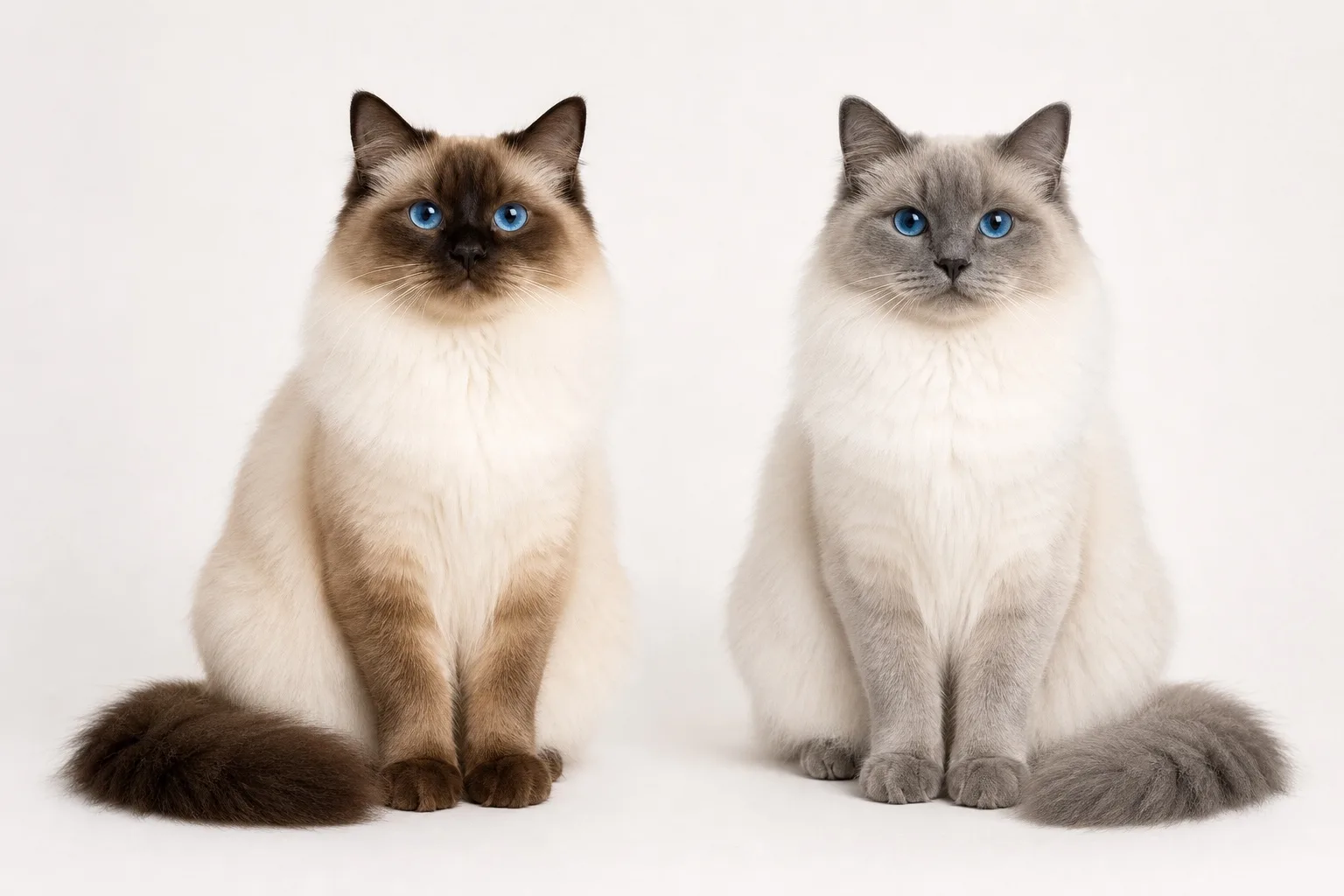
Seal and blue are among the most frequently compared Ragdoll colours in Singapore.
| Feature | Seal point | Blue point |
|---|---|---|
| Point colour | Deep, warm seal brown | Cool blue-grey or slate grey |
| Body colour | Cream to warm fawn | Bluish white to cool pale grey |
| Overall contrast | Usually stronger and darker | Usually softer and cooler |
| Kitten development | Starts pale and becomes warmer and deeper | Starts pale and develops clearer grey-blue points |
Compare cats of a similar age under similar lighting. Warm indoor bulbs, camera white balance and filters can make a seal point look grey or a blue point look brown.
Neither colour is a higher quality grade. Pedigree traceability, relevant health records, early socialisation and family fit matter more than whether the points are seal or blue.
When comparing a NekoTown kitten, families can ask whether photographs or videos from more than one stage are available and read them alongside the kitten’s age, parent information and recorded colour name. This is more reliable than treating a dark photograph as proof of better colour.
How to Recognise Lynx, Tortie and Tortie-Lynx
Lynx: stripes across the points
Lynx is a tabby overlay rather than a separate white pattern. Common features include:
- fine stripes across the mask and forehead
- pale edging around the eyes
- lighter markings inside or around the ears
- rings on the legs and tail
Lynx can combine with different colours and white patterns, producing names such as seal lynx colourpoint, blue lynx bicolour or chocolate lynx mitted.
Tortie: irregular patches of two colour families
Tortie points mix the base dark colour with red or cream patches. Examples include:
- Seal-tortie: seal points mixed with red or cream
- Blue-cream: blue-grey points mixed with cream, representing a dilute tortie combination
Most tortie cats are female because orange-related coat colour is carried on the X chromosome and the patchwork appearance is associated with random X-inactivation. It should not be written as an absolute rule: rare male torties can occur, including cats with an XXY chromosome pattern.
Tortie-lynx or torbie
When tortie patches also contain lynx striping, the standard term is tortie-lynx. Torbie is a commonly understood informal contraction, but the final registered description should follow the relevant association’s terminology.
For a long name such as seal-tortie lynx mitted, the useful question is whether the complete description connects to the correct kitten, parents, litter and registration record. NekoTown’s published selection standard treats that traceability as more meaningful than an invented marketing nickname.
Mink, Sepia, Cinnamon and Fawn: Why the Labels Differ
These terms often receive conflicting explanations because cat associations, breeding organisations and commercial websites do not all use the same classification system.
Mink and sepia
UC Davis Veterinary Genetics Laboratory explains the relationship between the colour restriction variants commonly associated with Siamese-type pointed and Burmese-type sepia coats:
- Siamese-type pointed cats have a lighter body with darker extremities.
- Burmese-type sepia cats produce more pigment across the body and show less contrast.
- Mink is the intermediate expression produced by the relevant combination of alleles.
In the TICA 2025 Ragdoll Breed Group standard:
- Ragdoll (RD) is the blue-eyed pointed cat.
- Cherubim (CB) includes mink, sepia and traditional colours within the breed group.
The phrase “mink Ragdoll” remains common on breeder and pet websites, but it should not be presented as though every association classifies it in exactly the same way.
Cinnamon and fawn
Cinnamon is a warm reddish-brown colour family, while fawn is its dilute expression. TICA describes Ragdolls broadly as occurring in all pointed colours, whereas the CFA Ragdoll standard specifically lists seal, blue, chocolate, lilac, red and cream.
Cinnamon and fawn therefore belong in an “extended terms you may encounter” section rather than being inserted into the CFA six-colour list.
NekoTown checks the actual registry or association shown on the available documents and distinguishes between issued records, pending records, breeder-provided information and information that cannot yet be verified. A colour guide can explain these terms, but it should not pre-judge a certificate that has not been reviewed.
Why Do Ragdoll Kittens Become Darker?
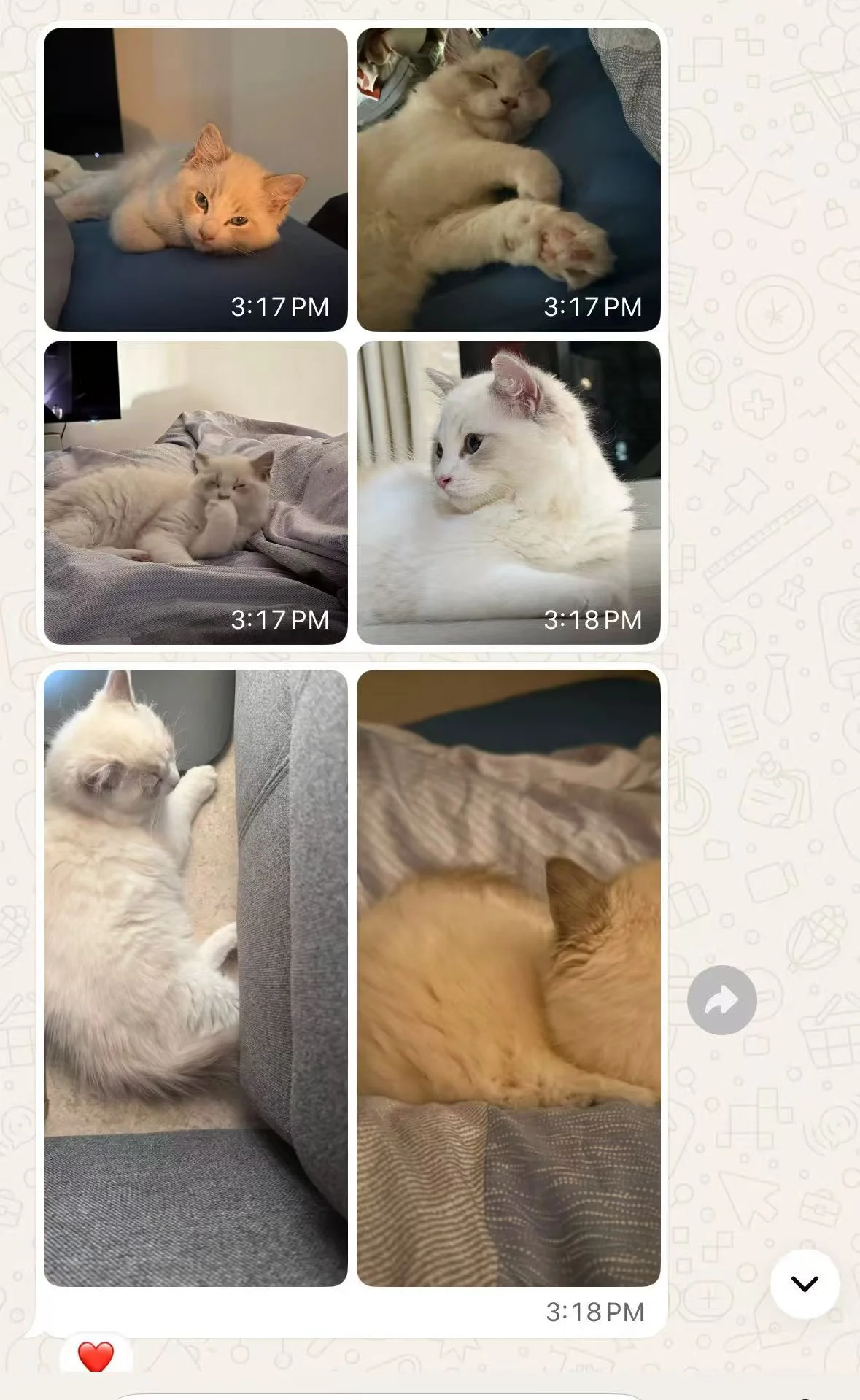
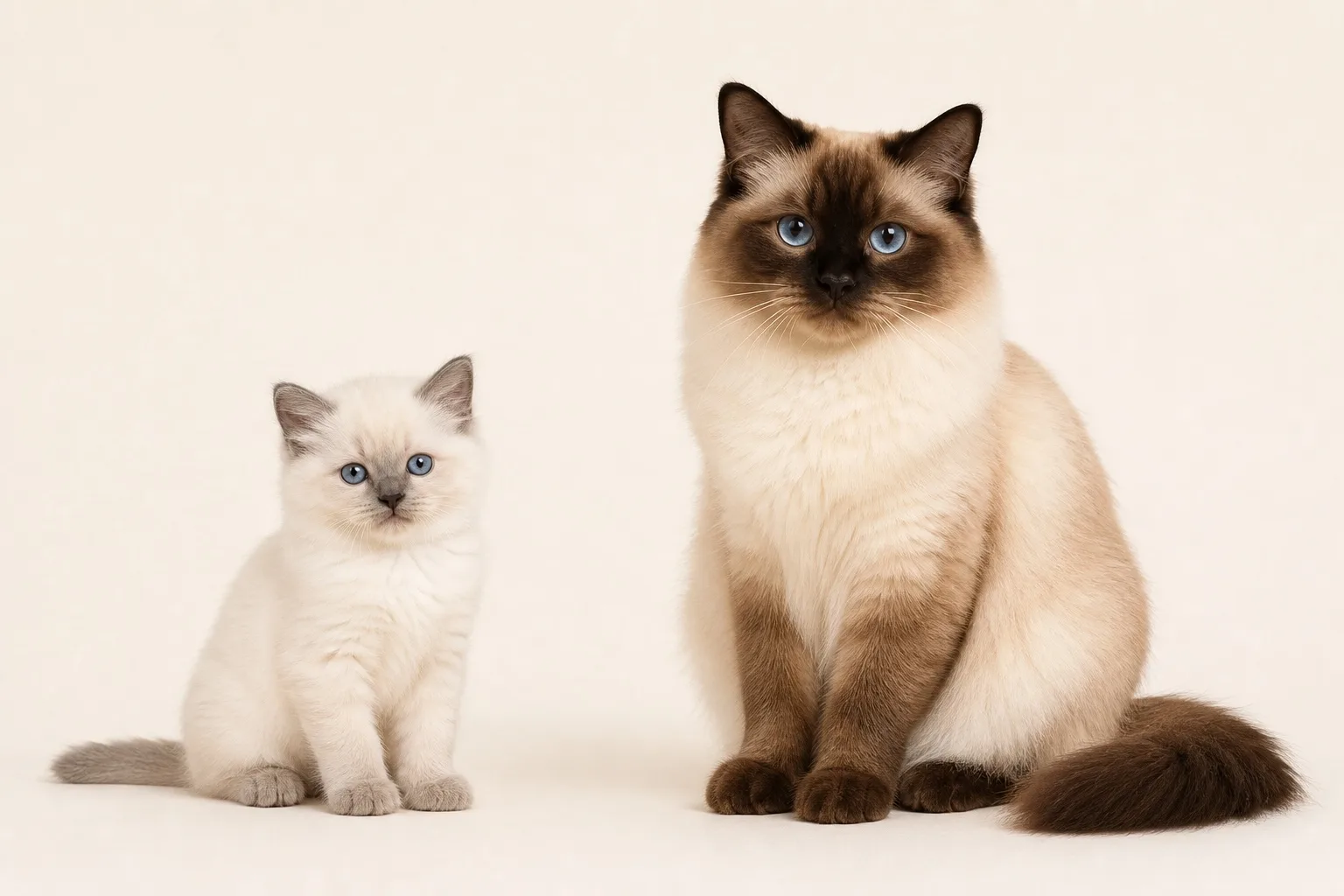
Traditional pointed Ragdoll kittens are born very pale. The face, ears, paws and tail gradually develop more colour as the kitten grows.
This happens because pointed pigmentation is temperature-sensitive. UC Davis explains that variants in the TYR gene affect pigment production: warmer areas of the body produce less pigment, while cooler extremities develop darker colour.
Adult colour should not be assigned to one fixed deadline. CFA breed information says full coat colour may take about two years, while CFA and TICA standard materials allow for colour and coat to continue developing towards approximately three years. Genetics, colour, age and the individual cat all influence the result.
The most useful consumer explanation is:
A kitten photograph shows the current stage, not the exact depth of the future adult coat.
Use the kitten’s age, parents, pattern and available pedigree information together. Do not promise that a pale kitten will mature into an exact shade based on one photograph.
NekoTown’s published selection process asks partner breeders to provide a current video and development update approximately every one to two weeks once a kitten enters candidate review. The review can include identity, weight, development, eyes, ears, skin and coat, movement, eating, litter habits, behaviour and medical changes. A sequence of updates provides better context than one edited image, although it still cannot guarantee an exact adult colour.
Choosing a Ragdoll Kitten in Singapore
Colour can be an enjoyable preference, but it should not replace health and suitability checks.
A sensible order is:
- Confirm the kitten’s identity, date of birth and available registration or pedigree information.
- Review the parents, relevant health screening and veterinary records.
- Consider the kitten’s age and accept that its point colour is still developing.
- Observe current health, behaviour, handling response and socialisation.
- Check whether the kitten’s needs suit the household, schedule and grooming capacity.
- Then choose the seal, blue, bicolour, mitted, lynx or other appearance you personally enjoy.
“Rare” does not automatically mean healthier, closer to a breed standard or more suitable for a family. There is also no reliable evidence that seal, blue, bicolour or lynx determines a fixed personality.
NekoTown’s published breeder-selection standard states that it does not accept a pairing solely because it may produce a rare colour, exaggerated feature or higher-priced kitten. Its review also considers parent identity and health records, kitten development, observable behaviour and the needs of the prospective home. The purpose is to place colour preference within a broader, traceable decision.
To continue your research:
- Read about Ragdoll kittens and breed care in Singapore.
- Browse currently available kittens in Singapore.
- Review NekoTown’s pedigree and health record standards.
- See how NekoTown selects breeders and individual kittens.
Frequently Asked Questions
How many Ragdoll colours are there?
It depends on the association standard being used. The CFA Ragdoll standard specifically lists seal, blue, chocolate, lilac, red and cream. TICA uses the broader wording “all pointed colours”. A website’s list of six, eight or twenty-four combinations should not automatically be treated as the only worldwide classification.
What is the difference between colourpoint, mitted and bicolour?
Colourpoint has no additional white spotting. Mitted adds white front mittens, white hind feet, a white chin and a belly stripe. Bicolour has more white, including the characteristic inverted V across the face and white across the chin, chest, belly and legs.
Is seal point or blue point better?
Neither is inherently better. Seal is warmer, darker and usually higher in contrast. Blue is cooler, greyer and visually softer. Choose according to appearance while giving greater weight to health records, pedigree traceability, socialisation and the individual kitten.
Is lynx a Ragdoll colour?
No. Lynx is a tabby overlay across the coloured points. It can combine with colours such as seal or blue and patterns such as colourpoint, mitted or bicolour.
Will a Ragdoll kitten become darker?
Usually, yes. Traditional pointed kittens begin very pale, and their face, ears, paws and tail gradually develop more colour. The amount and speed of change vary with genetics, colour, age and the individual cat.
Is mink considered a standard Ragdoll?
The answer depends on the registry. Under the TICA 2025 Ragdoll Breed Group standard, the blue-eyed pointed cat is Ragdoll (RD), while mink, sepia and traditional colours are included under Cherubim (CB). Check the association and the kitten’s actual registration documents rather than relying only on a sales label.
Are all tortie Ragdolls female?
Most are female, but it is not an absolute rule. The typical tortie pattern is linked to two X chromosomes and random X-inactivation. Rare chromosome patterns such as XXY can allow a male cat to show tortie colouring.
Does coat colour determine a Ragdoll’s personality?
There is no reliable evidence that seal, blue, bicolour or lynx fixes a cat’s personality. Genetics beyond coat colour, early socialisation, environment and daily interaction are more relevant. NekoTown records observable kitten behaviour rather than promising that a kitten’s current personality will never change.
Editorial sources
- TICA Ragdoll Breed Group Standard
- TICA Ragdoll breed page
- CFA Ragdoll Show Standard
- CFA Ragdoll breed page
- UC Davis VGL: Colorpoint Restriction
- UC Davis VGL: Feline Coat Color
- UC Davis VGL: Genetics Vocabulary
- NekoTown Ragdoll page
- NekoTown Pedigree & Health Records
- How NekoTown Selects Breeders and Kittens