Chocolate Kittens for Sale in Singapore
Warm brown coats, each with its own white markings. Meet our chocolate and white kittens, browse real photos and check the latest status to find the one you would like to meet.
Meet Our Current Chocolate Kittens
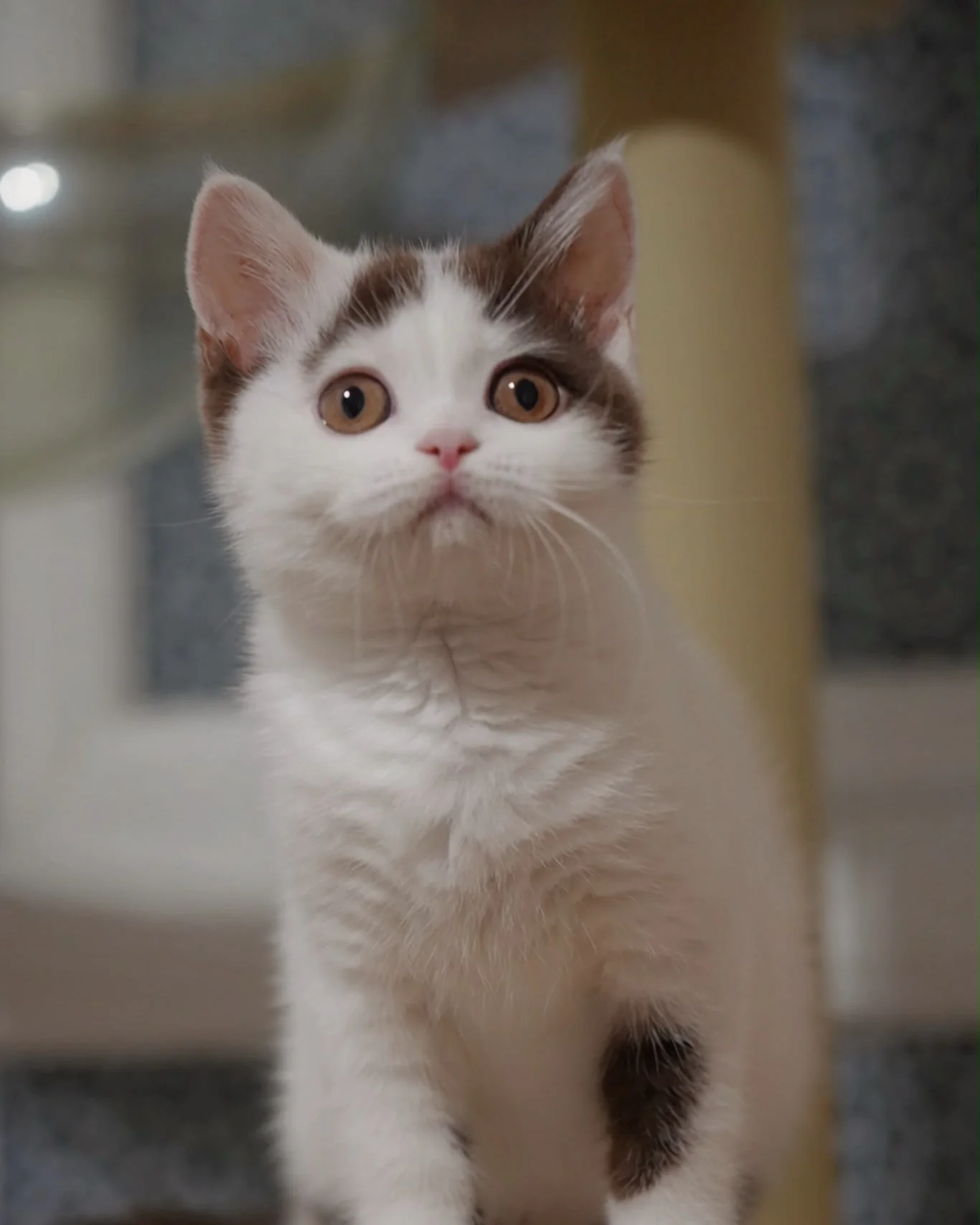
See each kitten’s photos, breed, sex and latest status. Open a profile to learn more about its appearance and personality. If no matching kitten appears, ask us about the colour and coat you prefer.
Getting to Know Chocolate Kittens
What Do Chocolate Kittens Look Like?
Chocolate brings to mind cocoa, milk chocolate and warm coffee brown. It has the depth of a dark coat with a softer visual effect than black, more warmth than blue-grey and a richer tone than cream. Shades can range from a brighter warm brown to a deep, full chocolate.
On a British Shorthair, a round face, round eyes and dense coat give that brown a little teddy-bear quality. On a Havana Brown or Oriental with a closer coat and longer silhouette, it looks sleek and elegant. Longer fur spreads the colour across a fuller, softer outline.
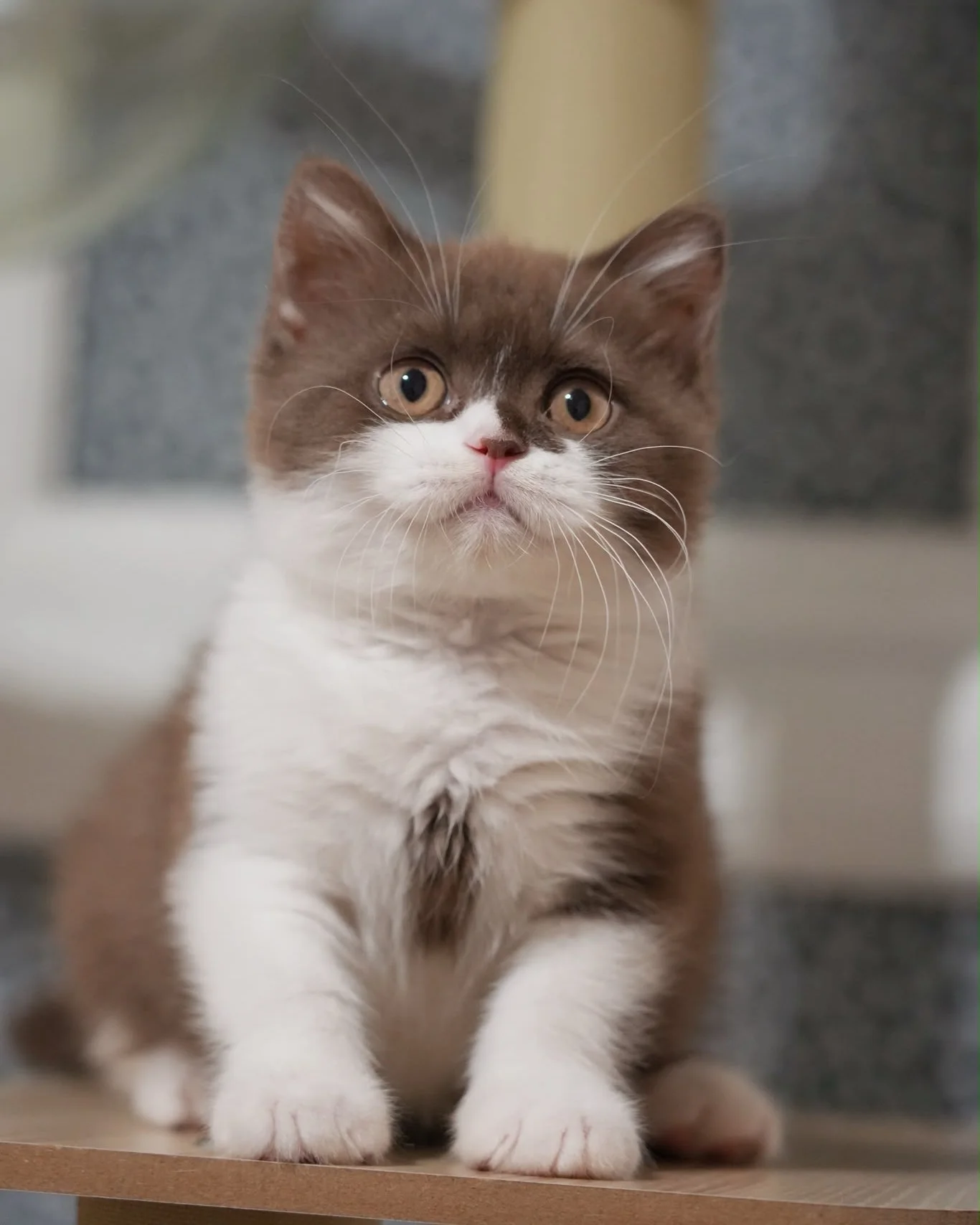
Chocolate and white adds bright spaces between the brown. White on the face, chest and paws makes each kitten’s pattern distinctive: Dumpling has a broader white area on her face, while Dango’s brown frames his eyes more closely. These are visual impressions; how playful or affectionate a kitten is comes from getting to know the individual.
Which Cat Breeds Can Be Chocolate?
Chocolate is not limited to British Shorthairs. You can also see it in British Longhairs, Havana Browns, Orientals and Persians, as well as chocolate-point Siamese and Ragdolls. Some have an all-brown coat, some combine brown with white, and others carry the darker chocolate mainly on their face, ears, legs and tail.
The Havana Brown is a particularly recognisable example of solid chocolate. British cats give the colour a rounder, denser appearance. Here is how coat length, pattern and eye colour fit together in these different breeds.
| Breed and colour | Coat length | How chocolate appears | Typical eye colour |
|---|---|---|---|
| British Shorthair | Short and dense | Solid chocolate or chocolate with white | Copper, orange or deep gold in solid chocolate; check the individual for bicolours |
| British Longhair | Semi-long and dense | Chocolate across a fuller coat, sometimes with white | Typically orange or copper in solid colours; blue in colourpoints |
| Havana Brown | Short and smooth | Glossy, solid chocolate brown | Green |
| Oriental | Shorthaired and longhaired varieties | Solid chocolate is called Chestnut by CFA | Green in solid chocolate; white and pointed patterns have different eye-colour provisions |
| Persian, solid chocolate | Long and full | Rich brown from root to tip | Copper; chocolate-point Himalayans have blue eyes |
| Siamese, chocolate point | Short and close-lying | A pale body with warm chocolate on the face, ears, legs and tail | Blue |
| Ragdoll, chocolate point | Semi-long | Chocolate points on a pale body, including mitted and bicolour patterns | Blue in traditional pointed Ragdolls |
Our real examples on this page are chocolate and white British Shorthairs. The other breeds help illustrate the different ways this colour can look; the current kitten cards show what is available here.
Explore British Shorthairs, British Longhairs and Ragdolls.
Why Is the Coat Chocolate?
Black and chocolate brown both involve eumelanin, a pigment responsible for dark hair. Particular variants of the TYRP1 gene affect this pigment and can produce brown rather than black. Chocolate is one of these inherited brown colours; it is not a black coat faded by sunlight or a dyed coat.
Chocolate is recessive to black. Two parents that do not look chocolate but carry the relevant variants can have chocolate kittens. That does not mean photographs alone can reveal a kitten’s full genetic makeup.
The colour of the brown and where it appears are separate parts of the picture. Chocolate can form a solid brown coat, appear alongside white spotting, or combine with a pointed pattern to give a lighter body and darker extremities. A chocolate British Shorthair and a chocolate-point Siamese therefore need not look alike.
Solid Chocolate, Chocolate and White, or Chocolate Point?
Solid chocolate has a continuous brown appearance across the face, body and tail. Chocolate and white combines coloured areas with white on the muzzle, forehead, chest, belly, legs or other parts of the body. The distribution varies from kitten to kitten.
More white does not mean the brown itself is paler. Dumpling’s broader white facial markings give her a brighter overall appearance. Dango’s more continuous brown around the eyes and forehead creates a stronger frame. Both profiles record chocolate and white, yet the first impression is different.
When comparing chocolate and white kittens, consider both the depth of brown you like and where you prefer the white markings. A front portrait shows the facial pattern; full-body photos reveal more of the back, legs and tail.
Chocolate point is another arrangement: the brown is concentrated at the extremities while the body remains relatively pale. This is the Chocolate Point seen in Siamese and traditional Ragdolls. White mittens or bicolour markings can also combine with points in some breeds, so the amount of white alone does not distinguish chocolate and white from chocolate point.
Are Chocolate Kittens Longhaired or Shorthaired?
Both. Chocolate describes colour, not coat length. British Shorthairs, Havana Browns and Siamese show shorthaired versions; British Longhairs, Persians and chocolate-point Ragdolls show semi-long or long coats.
Even short coats look different. A British Shorthair’s dense fur gives brown a plush, substantial finish. Havana Browns and Siamese have closer coats that reveal their outline and catch the light differently. Longer fur adds layers of light and shade around the chest, sides and tail.
If you like a compact, rounded teddy-bear look, start with chocolate British Shorthairs. If you prefer a full ruff and fluffy tail, compare British Longhairs or Persians. Longer coats also need more regular grooming: the same colour does not mean the same daily coat care.
What Eye Colour Do Chocolate Kittens Usually Have?
For a solid chocolate British Shorthair, the classic pairing is copper, orange or deep gold: warm eyes alongside warm brown fur. Dumpling and Dango are chocolate and white rather than solid, and both of their profiles also record copper eyes.
Other breeds create a different contrast. Havana Browns and solid chocolate Orientals have green eyes. Chocolate-point Siamese and traditional Ragdolls pair blue eyes with a pale body and brown points. Solid chocolate Persians have copper eyes, while the pointed Himalayan variety has blue eyes.
Chocolate alone therefore does not tell you the eye colour. Look at the breed and whether the kitten is solid, bicolour or pointed before comparing the combination.
Chocolate, Lilac and Cinnamon: What Is the Difference?
Chocolate is a fuller warm brown. Lilac is the dilute form of chocolate and looks much lighter, often with a soft grey-brown or pinkish cast. If you like warmth but prefer a paler appearance, compare our lilac kittens.
Cinnamon is another brown-family colour, associated with a different genetic variant. It is generally lighter and more reddish-warm than chocolate. It is neither a different sales name for chocolate nor its dilute form.
Chocolate point can also be confused with seal point. Chocolate points are a warmer milk-chocolate brown; seal points are darker, closer to deep brown. Both can have pale bodies, so a light body and dark face are not enough to identify the colour. Compare the recorded colour and several recent photographs, or explore our seal kittens.
Notable Chocolate Cats in Breed History and Cat Shows
Elmtower Bronze Idol is an important name in Havana Brown history. CFA’s breed history identifies this solid chocolate male as the first Havana Brown registered in England and a forerunner of the modern breed. His story shows that an all-brown coat has a documented breeding history well before today’s interest in chocolate cats.
Springnight Osiris of Chocolado is a show-ring example of chocolate point. This male Siamese was CFA’s 9th Best Cat and Best of Breed Siamese in Regions 1–9 for the 2024–25 season. His pale body and chocolate points illustrate a very different appearance from a solid brown Havana.
One is a breed-history name and the other a show winner. Together, they demonstrate that chocolate cats can have very different faces, coat textures and colour patterns. Read CFA’s Havana Brown history and its Siamese breed and award records.
Why Can Chocolate Look Lighter or Darker in Photos?
Warm indoor lighting brings out warm tones in brown, while shadows make it look deeper. Exposure and camera colour processing can also change how the same kitten appears between photographs.
On a chocolate and white kitten, the white fur offers a useful reference. If it looks yellow, warm lighting may also be shifting the brown; if it looks blue, the brown may appear cooler. White fur can help you notice a colour cast, but it does not turn a photograph into an exact colour chart.
Compare recent photographs taken in similar light, paying attention to the coloured crown, back and tail. Meeting the kitten lets you see the colour alongside coat texture, build and the kitten’s condition more clearly than one photograph can.
Does the Same Colour Mean the Same Personality?
Dumpling and Dango are both chocolate and white, but our descriptions of them differ. Dumpling enjoys quietly following people and staying close. Dango enjoys toys and play before resting beside people. Colour helps you find an appearance you like; activity and interaction style belong to the individual kitten.
Open the profile of a kitten that catches your eye to see recent photos and its personality description. In a private interaction room at 599 Geylang Road, you can look closely at the coat and take time to get to know the kitten.
Checking the Latest Chocolate Kitten Availability
The cards near the top show matching kittens that are available or arriving soon. Kittens that have found homes appear separately below. Open a profile for the latest status, or send us the kitten’s name before booking so we can confirm the arrangements.
If you have not found the right match, tell us whether you prefer solid chocolate or chocolate and white, along with the coat length and markings you like. You can use the photos here to show us what you have in mind. Browse all available kittens or ask us about chocolate kittens.
Chocolate Kittens That Have Found Homes
These kittens have already joined their families. Their real photos help you compare shades of chocolate and the brown-and-white markings across the face and body.
Chocolate Kittens FAQ
Breeds, coats, eye colours and visiting our kittens.