British Shorthair Cats in Singapore: Temperament, Coat, Health and Care
A buyer-friendly guide to the British Shorthair’s round face, quiet companionship, slow growth, dense coat, colours and life in a Singapore home.
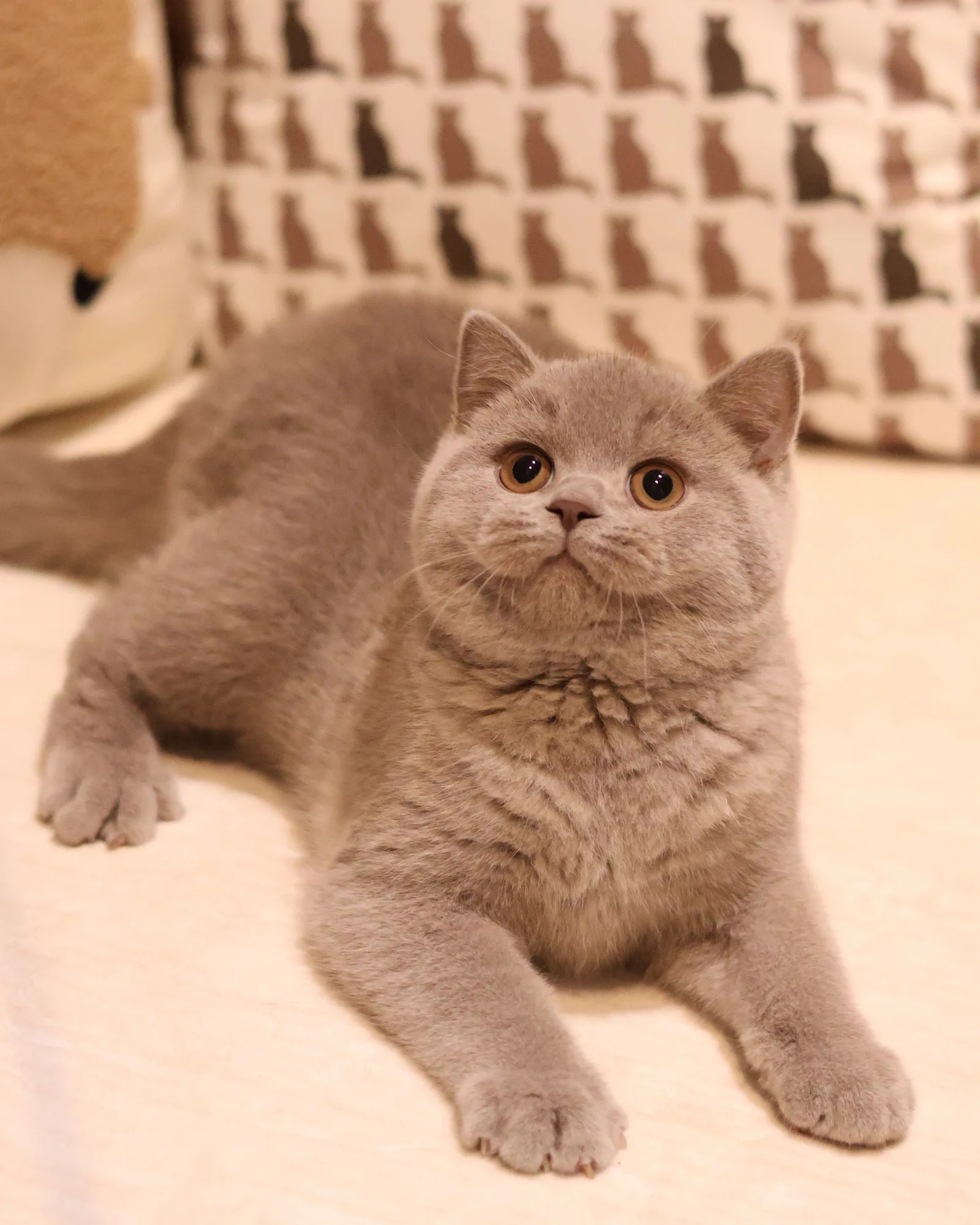
A British Shorthair may look soft and round, but beneath that plush coat is a solid, sturdy cat. The round face, broad chest, strong legs and dense short coat make the breed easy to recognise. Just as memorable is the way many British Shorthairs share a home: quietly, steadily and often close to their people without demanding constant attention.
This is also a breed that takes its time growing up. The full adult shape often develops gradually between three and five years of age. Choosing a British Shorthair means looking beyond the round kitten in front of you and thinking about its adult size, shedding, home setup and many years of family life.
You can see kittens currently open for enquiries on our British Shorthair kittens in Singapore page.
Why is the British Shorthair’s round face so recognisable?
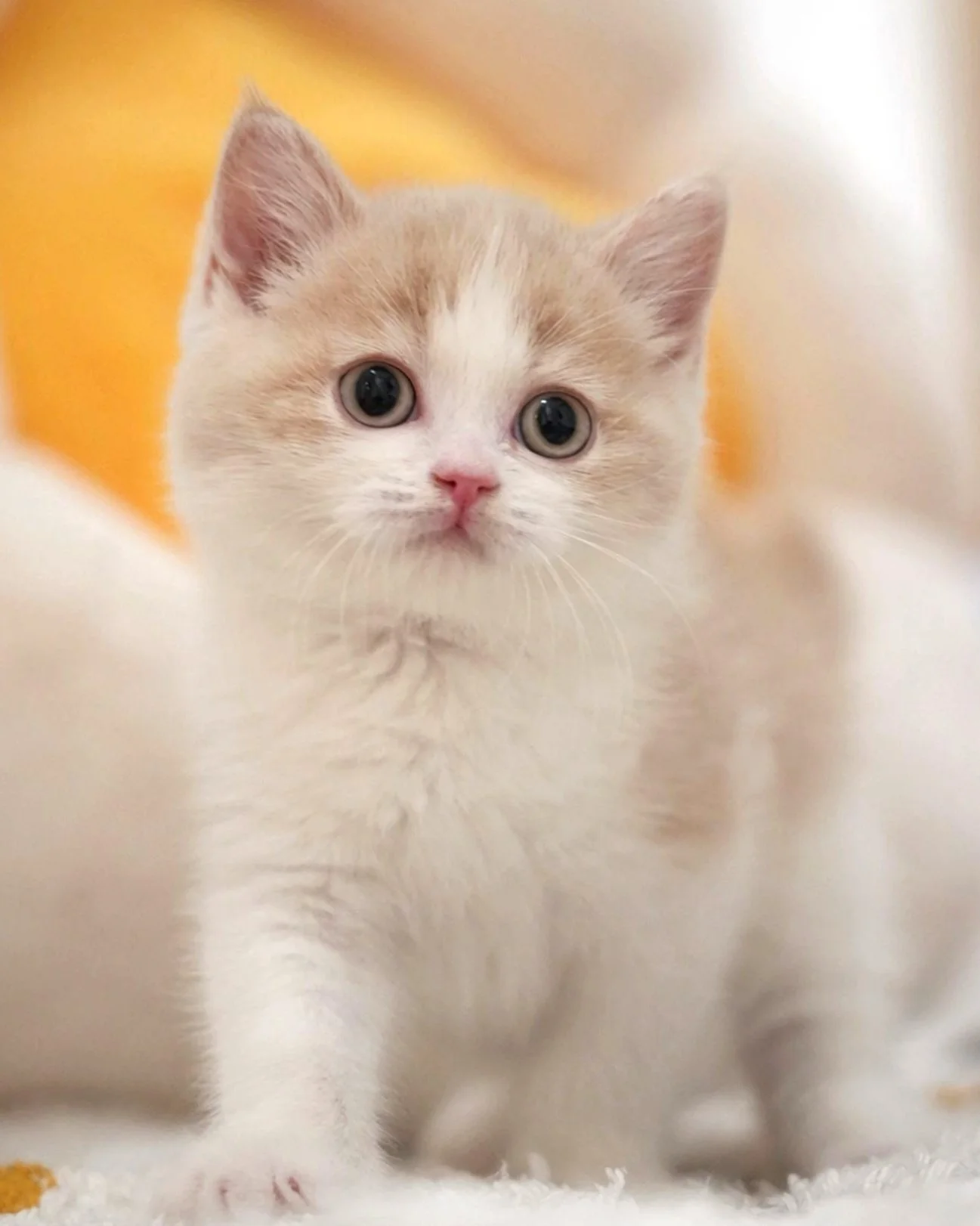
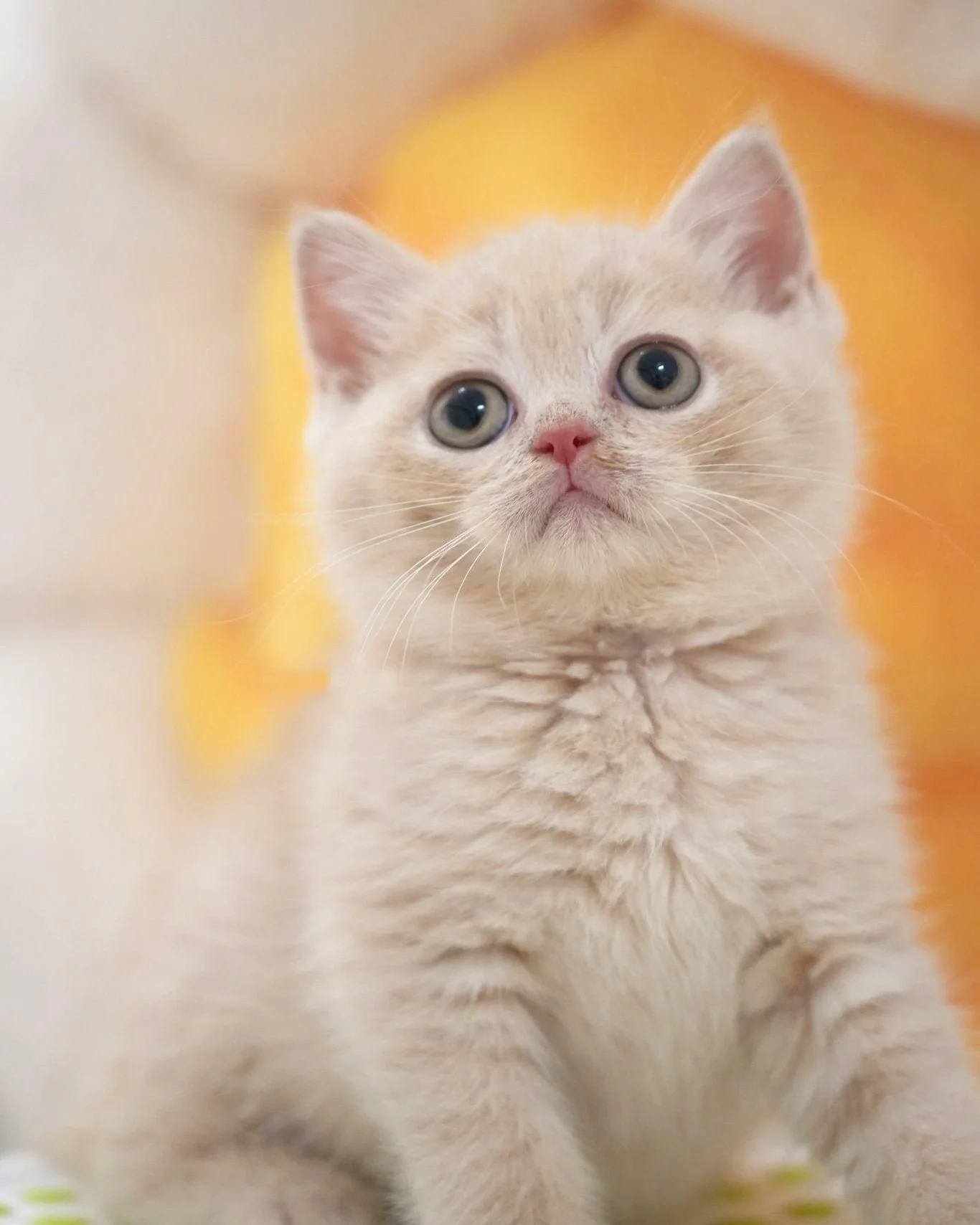
The face does not look round simply because of big eyes. Full cheeks, rounded whisker pads, small widely spaced ears and a broad nose all open up the face from the front, while the side view still keeps a natural nose line.
A kitten’s face is not finished yet. Adult males often develop fuller cheeks, while females may keep a slightly finer expression. A photo taken at three or four months can be adorable, but it captures only one moment in a long growing process.
The body carries the same rounded feeling. A broad chest, sturdy legs, round paws and a tail that narrows from a thick base give the British Shorthair its balanced shape. Sitting down, it can look like one compact ball of fur. Once it stands and walks, the strong body beneath the coat becomes much clearer.
One round face, many British Shorthair colours
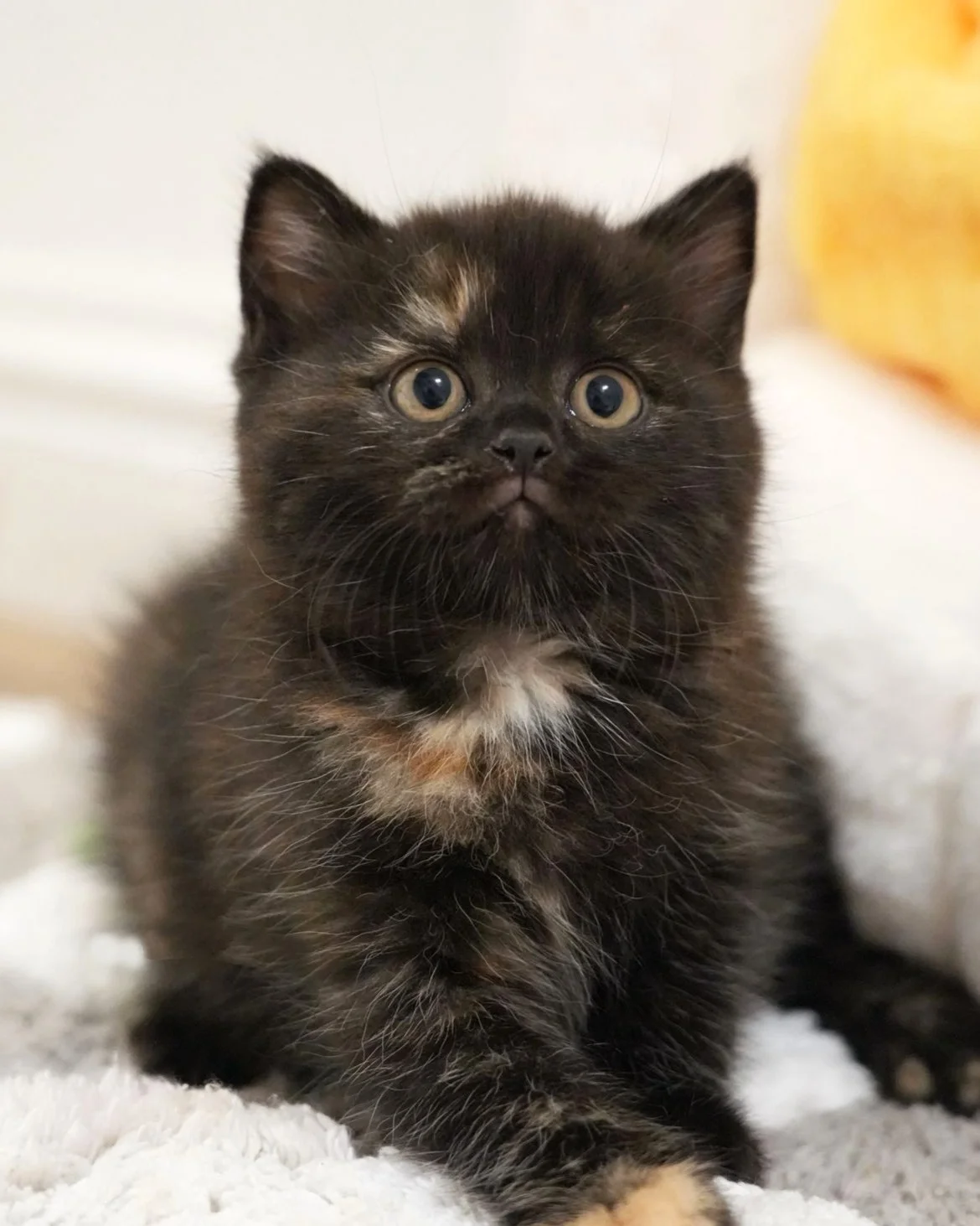
Many people first picture the classic blue-grey British Shorthair with copper eyes. The British Shorthairs we have met at NekoTown show a much wider range: blue, cream and bicolour kittens with copper eyes; golden coats with green eyes; and golden pointed kittens whose pale bodies and blue eyes create a very different expression.
Colour changes the mood of the same familiar face. Blue with copper eyes looks rich and classic. Golden with green eyes feels brighter. On a golden pointed cat, deeper colour around the ears, nose and tail makes the blue eyes the centre of attention. The round face, broad chest and dense short coat still look unmistakably British Shorthair, but every colour combination has its own character.
See the colours currently represented on our British Shorthair page. For a closer look at golden, silver and tipping terms, visit our Golden British Shorthair guide.
What is a British Shorthair like with its family?
Many British Shorthairs enjoy being near their family without needing to be on top of someone all day. One may follow you into another room, settle at the other end of the sofa or appear at the same time each evening to greet you. This quiet way of joining family life can suit people who want companionship while still giving their cat some space.
The breed is often described as preferring to keep four paws supported. Some individuals accept a short cuddle; others are happiest being stroked while standing or sitting securely. A breed description can only give you a general direction. The kitten in front of you will tell you much more through the way it approaches people, plays, responds to sound and decides when an interaction is over.
Will a British Shorthair stay a small, round kitten?
No. British Shorthairs mature slowly, and their chest, head and, in adult males, cheeks can continue to fill out well after kittenhood. Full physical maturity commonly takes around three to five years.
Choose everyday items with the adult cat in mind. The litter tray should allow an adult to turn comfortably. A carrier should have enough room to stand and lie down naturally. Cat trees and scratching posts need a stable base that can support a broad, solid cat. Planning ahead prevents kitten-sized equipment from becoming cramped too quickly.
The rounded outline can sometimes hide gradual weight gain. Weighing your cat monthly under similar conditions, feeling whether the ribs are easy to find and looking for a waist from above give a clearer picture than asking whether the cat still looks round.
Is a dense short coat really low maintenance?
A British Shorthair does not have the flowing edges of a longhaired cat, but its short coat is remarkably dense. Run a hand along the back and there is an even, plush resistance. Gently move the coat against its direction and it slowly settles back into place. That satisfying thickness is part of the breed’s appeal, and it also means normal shedding is still part of life.
For a healthy adult cat, a weekly full-body brush is a practical starting point. Brush more often when shedding becomes noticeable. Large mats are less common than in long coats, but floors, bedding and clothing will still collect fine short hairs.
Singapore is hot and humid. Provide shade, moving air, fresh water and cool places to rest. Continued open-mouth breathing, drooling, marked weakness or unusually slow responses can signal overheating and need prompt cooling and veterinary attention.
British Shorthair, British Longhair or Scottish Straight?
British Shorthairs and British Longhairs share the round face, broad chest and sturdy build. The clearest difference is the coat. A British Shorthair has short, dense, upright fur. A British Longhair grows a longer coat with a neck ruff, ear furnishings, fluffy back legs and a large plume-like tail. The extra length changes more than the photograph: it also changes grooming time and the places where loose fur is likely to tangle.
A Scottish Straight is a straight-eared kitten from the Scottish breeding system. It may also have a round face and upright ears, so photographs alone can be misleading. Pedigree records show whether a kitten comes from British or Scottish lines.
What should a buyer understand about British Shorthair health records?
HCM: a heart scan and a DNA test answer different questions
Hypertrophic cardiomyopathy, usually shortened to HCM, causes the heart muscle to become abnormally thick. Early disease may have no obvious signs. In one Danish screening study of 329 British Shorthairs, 8.5% were classified as HCM-positive. That figure belongs to the Danish group studied; there is no matching prevalence study for British Shorthairs in Singapore.
An echocardiogram records the heart’s structure and function at the time of the scan. A DNA report covers only the genetic variants named on that report. When reading parent records, check what type of test was performed, when it was done and whether the cat’s identity matches the document. A single line saying “tested” is not the same as understanding the report.
Laboured breathing, open-mouth breathing, sudden collapse, or sudden pain, coldness or weakness in the back legs requires emergency veterinary attention.
PKD: a negative result should still say what was tested
Polycystic kidney disease, or PKD, causes cysts to develop in the kidneys. A Persian-associated PKD1 variant has been identified in some British Shorthair lines, which is why some breeding records include a PKD1 test.
A negative result means the laboratory did not find the particular variant listed in the submitted sample. The laboratory, test name, sample date, cat identity and result interpretation help you understand exactly what the report does and does not answer.
For a specific kitten, we explain the pedigree, microchip, vaccination and available health documents that belong to that cat. Our Pedigree & Health Standards page explains what each type of record is for.
How long can a British Shorthair live?
Breed associations give broad ranges of about 12 to 20 years and 14 to 20 years. Veterinary studies can produce lower figures because their calculations include cats that died young as well as those that lived into old age. Population figures help describe a group; they cannot predict the lifespan of one kitten.
The useful message for a family is simple: a British Shorthair may share your life well into its teens. Budgeting should cover more than the kitten and first supplies. Annual health checks, dental care, travel arrangements and the possibility of higher medical costs in later life all belong in the long-term plan.
Preparing a Singapore home for a British Shorthair
British Shorthairs can live comfortably indoors. A stable cat tree, roomy litter tray, scratching post, quiet sleeping places and daily interaction usually matter more than having a very large home. Windows and balconies need reliable fall protection, and trips outside the home should be made in a secure carrier.
As of 23 August 2026, AVS requires pet cats to be microchipped and licensed. HDB flats generally allow up to two cats. Private homes, condominium rules and tenancy agreements may have separate conditions. The cat-licensing transition period ends on 31 August 2026, so check the latest AVS guidance when preparing an application.
What can you learn during a kitten viewing?
Letting a kitten move around naturally tells you more than a single seated photograph. Watch how it approaches people, follows a toy, walks and ends an interaction. You can also feel the density of the short coat and get a more realistic sense of body size.
Then match the microchip, date of birth, sex, colour, vaccination, import, pedigree and health records one by one. The aim is to connect every photograph and document to the same real kitten.
When you are ready, explore British Shorthair kittens in Singapore and arrange a visit through our kitten viewing page.
Editorial sources
- TICA — British Shorthair
- GCCF — British
- CFA — 2025–2026 British Shorthair Standard
- GCCF — British Shorthair Breeding Policy
- HCM screening cohort — PubMed PMID 21736622
- PKD case series — PubMed PMID 25677715
- UK cat life tables — PubMed PMID 38714312
- WSAVA Global Nutrition Guidelines
- AVS licensing requirements
- AVS Cat Management Framework update, 18 July 2026
Questions Buyers Ask About British Shorthairs
Clear answers about shedding, slow growth, colours, health reports and keeping a British Shorthair comfortable in Singapore.