Munchkin Cats in Singapore: A Complete Guide to the Breed
Look beyond the short legs and compare movement, body shape, short and long coats, home setup and the questions worth asking before choosing a Munchkin kitten.
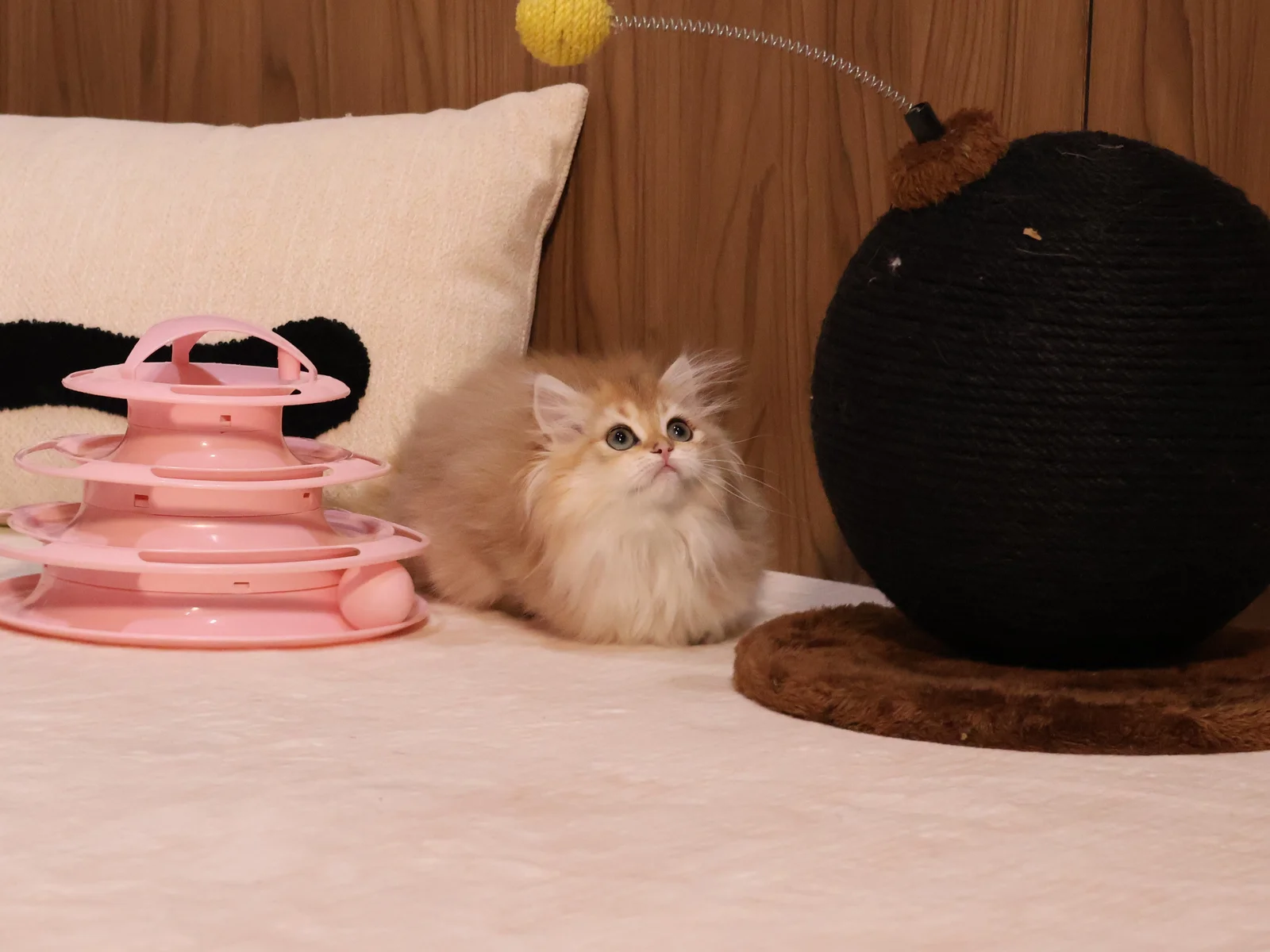
A Munchkin is easy to recognise when it walks into the room: the body travels closer to the floor and the back looks longer above the shorter legs. Then the rest of the kitten takes over. A short coat keeps that low silhouette crisp; a long coat rounds it with a fuller chest and tail. Colour and eye colour can make two Munchkins look like completely different cats.
This guide covers the breed itself—leg terminology, coat types, movement, home setup, health evidence and life in Singapore. Our Munchkin kittens in Singapore page carries current kittens, prices and viewing information.
Short legs are the first detail, not the whole cat
NekoTown’s kitten history includes short-haired, blue-eyed red point and blue tabby-and-white Munchkins, as well as long-haired blue golden with copper eyes and golden with green eyes. The shared short-leg proportion did not decide coat length, colour, eye colour or expression.
Short hair makes the body’s low outline easy to see. Long hair adds a ruff, fuller hindquarters and a plume-like tail, sometimes hiding more of the leg. These examples come from kittens we have cared for; the live cards on our Munchkin page show today’s selection.
What do “standard” and “non-standard” mean?
In Munchkin breeding terminology, “standard” usually means a cat expresses the short-leg trait. “Non-standard” describes a related kitten with legs of ordinary length. These words describe leg length. They are not a health grade, a quality ranking or a measure of how good a companion the cat will be.
Research has linked the short-legged phenotype to a structural variant involving the UGDH gene. The study explains inheritance: the variant tracked with the short-leg appearance in the cats examined, and the authors proposed that inheriting two copies may not be viable. This genetic result explains the trait; it does not give a complete lifetime forecast for an individual kitten.
Is a Munchkin always a very small cat?
“Munchkin” describes the legs relative to the body. Adult weight, body length, chest width, head shape and coat volume still vary between individuals and lines. A short-legged adult can have a substantial body.
Choose equipment for actual body length and adult weight. The litter tray should allow a complete turn. The carrier should allow natural standing and lying. Platforms need a stable surface and enough room for secure footing.
Can Munchkins walk, run and jump?
Many Munchkins walk, run, play and reach lower surfaces. There is no single jumping height or preferred route for the whole breed. One cat may use a chair as an intermediate step; another may spend more time chasing toys on the floor.
The most useful viewing is ordinary rather than staged. Watch the kitten walk in a straight line, turn, rise from rest, chase a toy and step onto and down from a low platform. Look for comfortable, symmetrical movement and willingness to continue playing. A posed sitting photograph cannot show these details.
Long-term evidence about every possible movement outcome remains limited. That means neither “all Munchkins are completely unaffected” nor “every Munchkin will develop an orthopaedic problem” is a responsible promise. Current veterinary findings, natural movement, body condition and relevant family information are the evidence for the individual.
How to arrange height in the home
You do not need to remove every high place. Create more than one safe route. Stable platforms with smaller height gaps can lead towards a bed or window perch. Non-slip mats help on smooth floors. A tall cat tree can include intermediate landing areas and a lower way down.
Use a litter tray with an entrance the individual cat can cross comfortably. Place food, water, rest areas and hiding places where they are easy to reach. Watch the routes the kitten actually uses and adjust the home around that evidence.
Short-haired and long-haired Munchkins
Both coat lengths occur. A short-haired Munchkin has a closer, more compact grooming routine and a clearer body outline. A long-haired Munchkin has more visible fullness around the chest, hind legs and tail, with extra friction points that can knot.
For a short coat, a weekly brush is a practical starting point. For a long coat, begin with two or three short sessions each week. Check behind the ears, under the front legs, across the belly, around the hindquarters and at the tail base. Increase or reduce the routine according to the actual coat and shedding.
Living with a Munchkin in Singapore
Both coat types need shade, airflow, fresh water and dry resting areas. After cleaning a long coat, separate the fur under the arms and across the belly to confirm that it is dry near the skin. There is no universal air-conditioning schedule; use the home conditions and the individual cat’s comfort as the guide.
Munchkins still climb towards windows, explore gaps and investigate doors. Secure fall-risk openings and provide daily play. Measured feeding and regular weight checks help avoid unnecessary load while supporting muscle condition.
At the time this guide was reviewed, Singapore pet cats required a microchip and AVS licence, and HDB flats generally allowed up to two cats. Condo management rules and tenancy agreements can add other conditions.
Which health and identity records matter?
The short-leg genetic finding explains appearance. The individual kitten’s current health comes from its veterinary examination, natural movement, body condition and documented background.
Match the microchip or another clear identity reference across the pedigree or registration record, vaccination and deworming history, veterinary certificate, import records and available parent reports. Read the name and date of each examination or test. “Health checked” without scope, identity and date leaves important questions unanswered.
Persistent limping, pain on touch, an unusual posture, a clear reduction in activity or a change in toileting posture needs prompt veterinary assessment.
What to observe during a viewing
How does the kitten walk, turn, rise, run and use a low platform?
Does it move symmetrically and keep playing comfortably?
Does it approach people directly, watch first or build confidence through play?
Is the coat short or long, and what grooming will that coat require?
Can the identity details be matched across the documents?
What food, litter and daily routine does the kitten already know?
A kitten viewing lets you connect the movement, interaction and records of the individual. Our Pedigree & Health Standards page explains the document set.
The first two days at home
Prepare a quiet room with resources at easy-to-reach heights. Use a low-entry litter tray, keep food and water away from the litter and add stable hiding places, a scratcher and an open carrier. Continue familiar food and litter while the kitten settles.
Record eating, drinking, urination, bowel movements, activity and usual gait. Once the kitten is confident, introduce more rooms, people and resident animals gradually. Avoid forcing jumps to test what it can do.
When a Munchkin may be the weaker fit
Take more time if the household is choosing solely for short legs, cannot provide non-slip routes or stable intermediate platforms, is unwilling to observe movement over time, or expects a breed name to replace kitten-specific veterinary evidence. A good match begins with the entire cat.
Continue on NekoTown
Munchkin kittens in Singapore: current kittens, prices and viewing.
Long-haired kittens in Singapore: compare long-haired Munchkins with British Longhairs and Ragdolls.
Short-haired kittens in Singapore: compare short-haired Munchkins and British Shorthairs.
Book a kitten viewing: meet an individual kitten at NekoTown.
Editorial sources
Questions Buyers Ask About Munchkin Cats
Clear answers about leg terminology, jumping, health evidence, coat length and apartment living.