Long-Haired Cats in Singapore: Why We Love Them and How to Care for Their Coats
Why do people love long-haired cats? Learn about coat care, brushing, mats, hairballs and choosing a fluffy cat for life in Singapore.
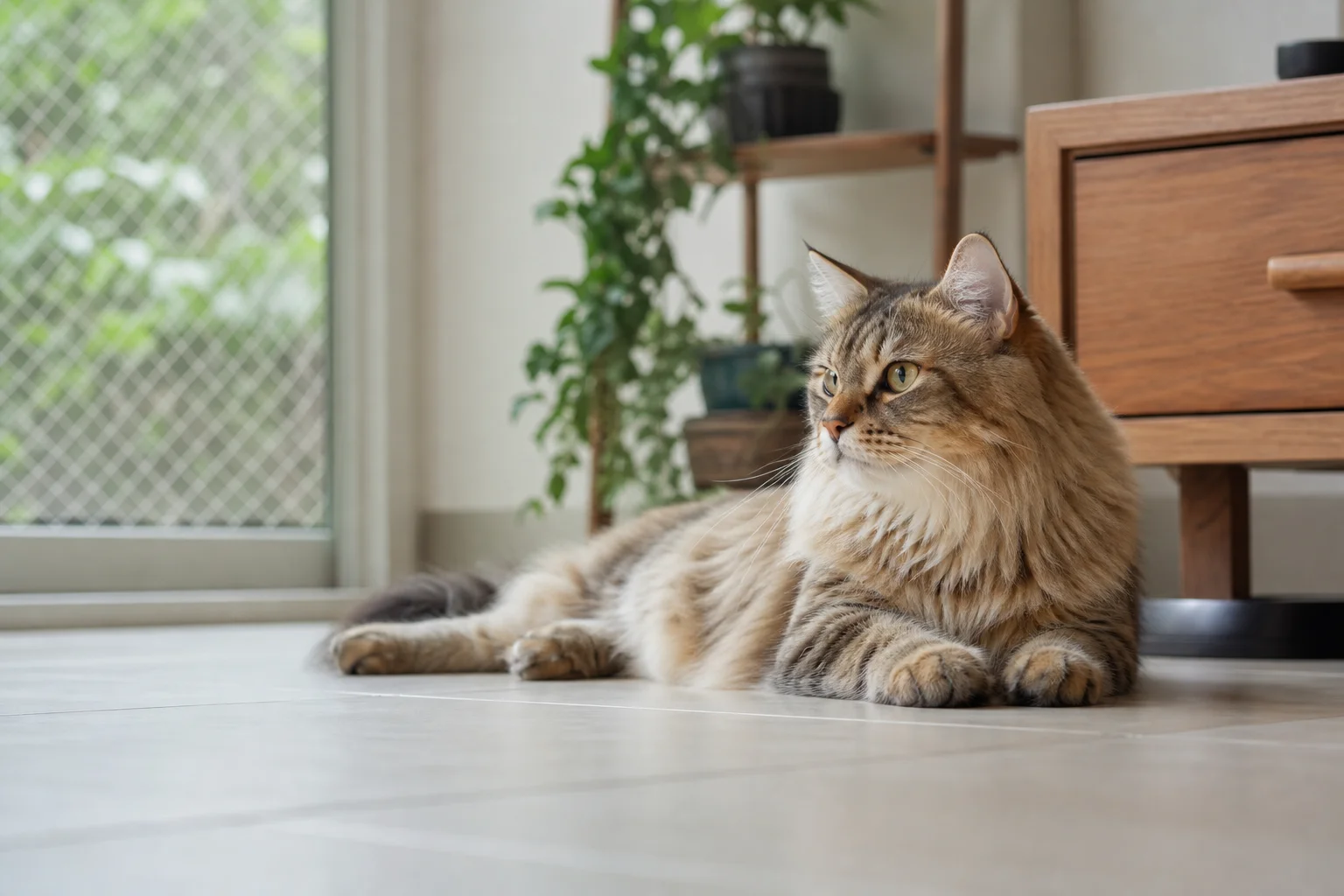
Long-haired cats have an unmistakable presence. A full tail, a soft ruff around the face and a coat that changes shape as the cat moves can make even an ordinary stretch look rather grand. Some people are drawn to that flowing silhouette, some love the soft texture, and others enjoy the quiet routine of spending a few minutes grooming their cat.
Living with a long-haired cat also means caring for the coat behind the look. Brushing, checking friction points, clearing loose fur from the home and noticing changes in self-grooming all become part of the routine. In Singapore, where temperatures and humidity remain high throughout the year, it is also worth planning for a comfortable indoor environment and regular coat checks.
“Long-haired” describes a coat, not one type of cat
Long-haired cats are not a single breed. The category includes pedigree breeds and domestic cats, with coats that differ considerably in texture and structure. One cat may have a dense undercoat that catches loose fur easily, while another may have a silkier coat with less undercoat. Some develop a prominent neck ruff and full tail; others simply have hair that is longer than that of a typical short-haired cat.
Those differences affect care. Undercoat density, hair texture, age, body condition, mobility and self-grooming ability can all influence how quickly tangles form. Two equally fluffy-looking cats may therefore need different brushes and different grooming schedules.
If you are comparing breeds, you can explore our guides to the British Longhair and its coat and the Ragdoll breed. Both can have a distinctly fluffy appearance, but their coat structures and individual grooming needs are not identical.
Coat length also tells us very little about an individual cat’s temperament. Whether a cat enjoys being held, seeks constant company or accepts brushing comfortably is better understood through the cat’s own behaviour, early experiences, health and real-life interaction.
Why are people drawn to long-haired cats?
There is no single reason, and there is no objective scale on which a long coat is “better” than a short one. The appeal usually comes from a combination of appearance, touch and the kind of care routine a person enjoys.
A fuller, more expressive silhouette
Long hair adds volume around the face, chest, body and tail. It can make a cat look regal, cloud-like or even a little lion-like, depending on the coat and posture. These are visual impressions rather than formal breed descriptions, but they help explain why long-haired cats stand out in photographs and at first meetings.
Softer-looking colour and pattern transitions
Longer hair can make colour blocks, shading and tabby markings appear softer or more layered. The same named colour may look quite different on a short coat and a flowing coat. Photographs are a useful starting point, although seeing the cat in natural light gives a clearer impression of the actual colour, texture and condition.
For a kitten, the adult coat may not yet be fully developed. Parent-cat photographs and information about the mature coat can help set more realistic expectations than one carefully styled kitten photo.
Grooming can become shared quiet time
Some cats learn to enjoy short, predictable grooming sessions. For the owner, this time offers a chance to feel for small tangles, look at the skin, notice the body outline beneath the fur and learn which areas the cat likes or dislikes being touched.
A positive routine develops gradually. The aim is a comfortable, repeatable experience, rather than completing the entire coat in one long session.
The look is only the beginning of the decision
A beautiful coat creates the first impression. Long-term fit also depends on time, cleaning habits, the family’s comfort with loose hair and the ability to obtain professional help when needed. Considering those practical factors early makes it easier to enjoy the cat’s coat throughout its life.
What determines how much grooming a long-haired cat needs?
Singapore’s Animal & Veterinary Service recommends regular brushing and highlights its importance for cats with long or thick coats because of the risk of matting. The RSPCA notes that many long-haired cats need daily grooming.
These recommendations work best as a range rather than a universal timetable. Start with short, regular coat checks, then adjust the frequency according to how quickly your cat develops tangles.
| What you observe | A practical response |
|---|---|
| A silky coat with little undercoat and very few tangles | Brush and check the coat several times a week, adjusting when loose hair increases |
| Dense undercoat or small tangles returning quickly behind the ears or under the legs | A brief daily comb-through may be easier and more comfortable |
| An older cat, reduced mobility, weight gain or a recent decline in self-grooming | Offer more gentle assistance and ask your veterinarian whether pain or illness may be involved |
| Large, tight or painful mats close to the skin | Arrange an assessment with a veterinarian or an experienced cat groomer |
The result matters more than the number on a calendar. Check whether the comb can move through the deeper coat without pulling, whether friction points remain free of knots, how the cat responds and whether the skin looks and smells normal.
A manageable home-grooming routine
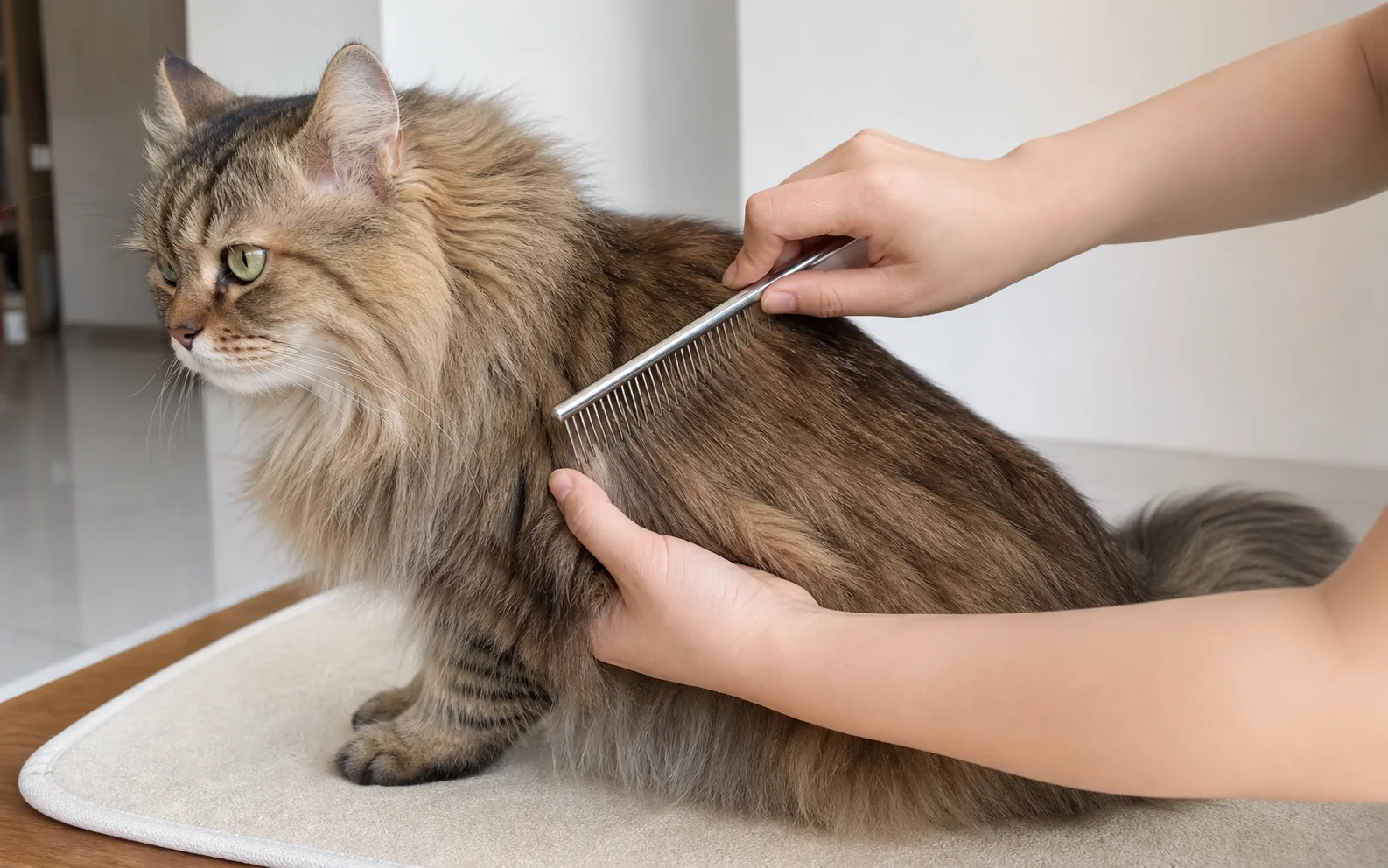
Keep sessions short and gentle, and follow your cat’s comfort signals. This editorial image is not a medical or professional grooming instruction.
Begin with a simple set of tools
A wide-toothed metal comb can help you check the deeper coat. A pin brush or another soft brush your cat accepts can collect loose surface hair. Some cats prefer a grooming mitt because it feels more like stroking.
The best tool is one that suits the individual coat, protects the skin and remains comfortable for the cat. Your veterinarian or an experienced cat groomer can help if you are unsure which tool reaches the coat properly.
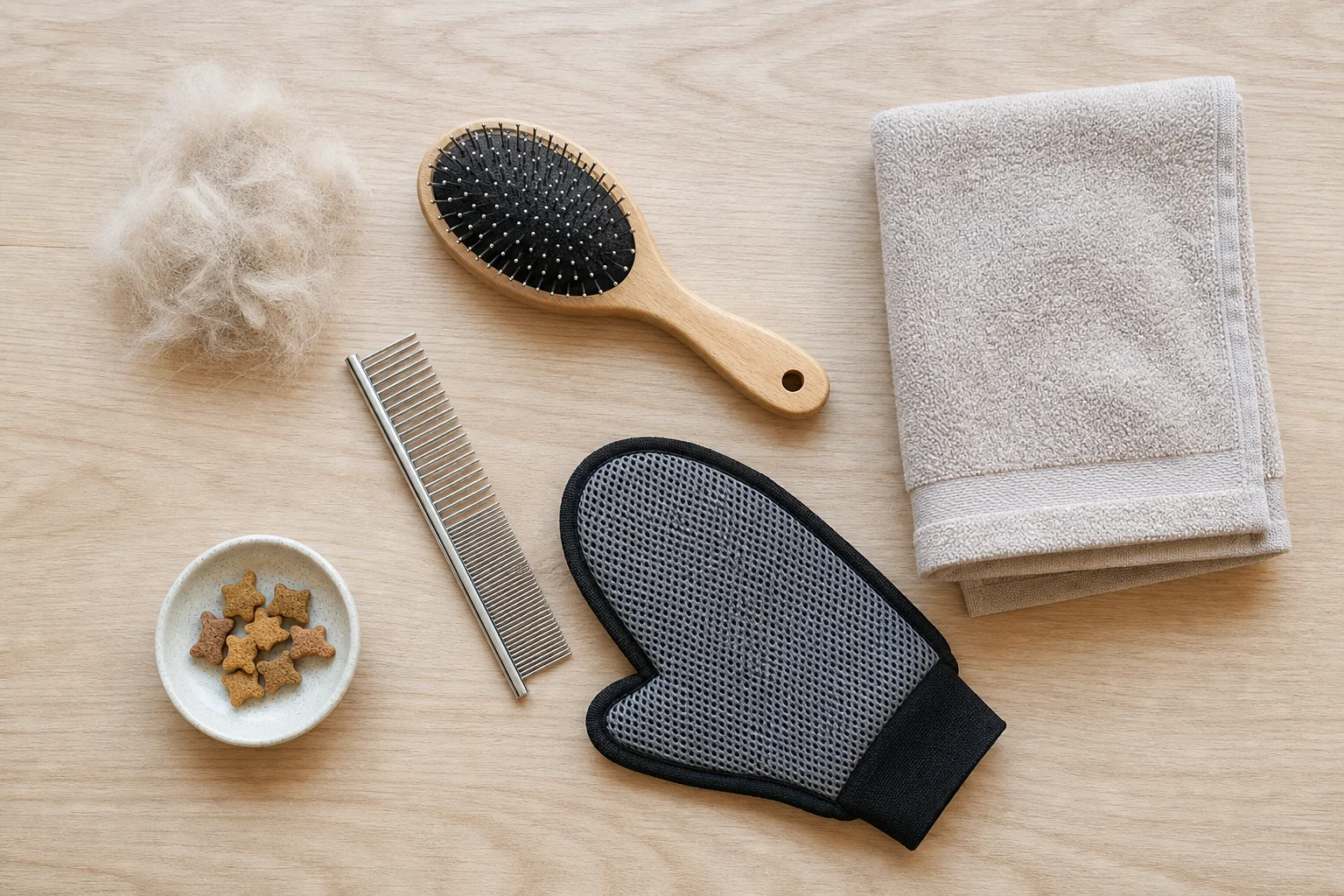
A simple kit is often enough to begin. Choose tools that suit the individual coat and that your cat tolerates comfortably.
Choose a relaxed moment
Start when your cat is settled, perhaps after play or a meal. Begin at an area the cat already enjoys having touched, such as the cheeks, side of the neck or upper back. Work for a short time and use a familiar reward.
Watch the cat as closely as the coat. Rapid tail movement, skin twitching, turning to stare at the brush, growling, hissing or trying to leave are useful signals that the session should end.
Work in small sections and follow the hair growth
Comb gently in the direction the hair grows. Areas with movement or friction deserve particular attention, including behind the ears, the chest, armpits, abdomen, backs of the legs and around the base of the tail. The RSPCA grooming guide also identifies several of these areas as common tangle points.
Pulling through resistance can be painful and may make the cat more wary of future grooming. A few comfortable sections today are more useful than a stressful full-body session.
Deal with tangles while they are still small
A loose, newly formed tangle may sometimes be separated gently with the fingers before careful combing. Tight mats can sit extremely close to a cat’s thin skin. Scissors create a serious risk of cutting the skin when the boundary beneath the mat is difficult to see or the cat moves suddenly.
The VCA guide to grooming long-haired cats advises seeking help when mats are large or widespread, home care causes distress or there is a risk of injury. A veterinarian can also investigate discomfort, weight, dental pain, arthritis or another condition that may have reduced the cat’s ability to groom.
Bathe according to an actual need
Healthy cats generally do a considerable amount of self-cleaning. Bathing can be arranged according to coat condition, soiling and professional advice rather than a fixed monthly schedule.
A bath may have a clearer purpose when the coat is visibly dirty, has come into contact with a substance that requires assisted cleaning, or when a veterinarian recommends a particular approach for a skin condition. Use products intended for cats and dry the coat thoroughly. Ask for professional guidance if the cat is highly distressed, the coat is badly matted or the skin is already irritated.
Hairballs: look at frequency and the whole cat
Cats swallow loose hair during self-grooming. The Cornell Feline Health Center states that long-haired breeds may be at greater risk of developing hairballs than short-haired breeds. Regular combing helps remove loose hair before the cat swallows it.
An occasional hairball and repeated unproductive retching are different situations. Contact a veterinarian if your cat repeatedly retches without producing a hairball, vomits persistently, loses interest in food, becomes lethargic or shows a change in bowel movements. Hairball remedies, laxatives and specialised diets should be used with veterinary guidance, particularly once symptoms have appeared.
Helping a long-haired cat live comfortably in Singapore
The Meteorological Service Singapore describes the country as having high and relatively uniform temperatures and high humidity throughout the year. That climate background can be translated into a few dependable home habits:
- provide shaded, well-ventilated indoor resting areas and allow the cat to choose where to settle;
- keep clean drinking water available and watch for changes in drinking, appetite, activity or breathing;
- dry a wet coat promptly and check the deeper hair near the skin;
- use grooming time to inspect the skin, ears, armpits and abdomen;
- provide scratching surfaces, climbing options, hiding places and interactive play for indoor enrichment.
Open-mouth panting, obvious breathing difficulty or severe weakness requires immediate veterinary attention. If this happens, contact a veterinarian first. NekoTown families can then let us know promptly so we can help review the handover information and the next practical arrangements with you.
Comfort needs also vary with age, body condition, facial structure, health and activity. The useful question is how the individual cat is coping in the actual home, rather than whether every long-haired cat requires one identical room temperature or cooling routine.
Six questions to ask before choosing a long-haired cat
- Is someone in the household willing to provide short grooming sessions several times a week, and daily when the coat requires it?
- If the cat dislikes a particular brush, is the family prepared to slow down and try a more suitable approach?
- Can the household accept loose hair on floors, furniture and clothing and maintain a regular cleaning routine?
- Can children and existing pets give the new cat a quiet area and a gradual introduction?
- Is there a plan and budget for veterinary or professional grooming help if tight matting, skin changes or repeated vomiting develops?
- Will the decision include the cat’s behaviour, present grooming tolerance, identity and health records, as well as coat colour and appearance?
Clear answers make the long-term commitment easier to understand. If the routine still feels uncertain, try placing the expected grooming and cleaning time into a normal week before deciding. You can also compare coat types that are easier to maintain.
Meet the individual cat before deciding
If you are still comparing a British Longhair, Ragdoll or another cat, begin with coat and care differences, then meet the individual kitten.
During a NekoTown appointment, we can explain the kitten’s current grooming routine, response to touch and brushing, and the care rhythm that should continue after handover. You can view kittens currently available to meet and read how we organise information about pedigree, identity and health records.
A licence record, pedigree document, veterinary record and day-to-day observation each answer a different question. Looking at them together provides a fuller basis for choosing than a beautiful photograph alone. For more practical ownership information, browse our cat care guides.
Frequently asked questions
Do long-haired cats need to be brushed every day?
Many cats with dense undercoats or coats that tangle easily benefit from a brief daily comb-through. Others can remain comfortable with grooming several times a week. Check behind the ears, under the legs, across the chest and abdomen, then adjust the frequency according to how quickly small tangles return.
Do long-haired cats get too hot in Singapore?
Singapore is warm and humid throughout the year, so provide shaded, well-ventilated indoor areas, clean water and comfortable places the cat can choose. Individual tolerance also depends on health, facial structure, body condition, activity and coat condition. Open-mouth panting or obvious breathing difficulty requires immediate veterinary attention.
Are long-haired cats more likely to get hairballs?
The Cornell Feline Health Center states that long-haired breeds may be at greater risk of hairballs. Regular combing helps remove loose hair before it is swallowed. Repeated retching, persistent vomiting, appetite changes or altered bowel movements should be assessed by a veterinarian.
Can I cut a mat out of my cat’s coat with scissors?
Scissors can easily cut a cat’s thin skin because a tight mat may sit very close to the body and the cat may move suddenly. A small, loose tangle may be separated gently if the cat remains comfortable. Tight, painful or widespread matting should be assessed by a veterinarian or an experienced cat groomer.
Does a long-haired cat need a bath every month?
There is no single bathing interval for every long-haired cat. Arrange bathing according to the individual coat, visible soiling, skin condition and professional advice. Use a cat-appropriate product and dry the coat thoroughly.
Are long-haired cats more affectionate than short-haired cats?
Coat length describes appearance rather than temperament. Breed tendencies may offer an initial reference, while the individual cat’s behaviour, early experiences, health, socialisation and home environment shape how it interacts with people.
When should I ask a groomer or veterinarian for help?
Seek professional help when mats are tight to the skin, extensive or painful, or when a cat suddenly stops maintaining its coat. Skin redness, odour, hair loss, repeated vomiting, appetite changes or lethargy should be discussed with a veterinarian first.
What should I ask before choosing a long-haired kitten?
Ask about the current brushing schedule, tools used, response to handling, common tangle points and the mature coats of the parents. Review the kitten’s identity, relevant veterinary records, pedigree information where applicable, and the care routine that should continue after handover.
Editorial sources
- Animal & Veterinary Service: Caring for a cat
- Meteorological Service Singapore: Climate of Singapore
- Cornell Feline Health Center: The Danger of Hairballs
- RSPCA: How and why to groom your cat
- VCA: How to groom a long-haired cat
- Cats Protection: Tips for grooming long-haired cats
- AVS: Public Registry of AVS-Licensed Pet Shops